

TL;DR:
- The best time to sail Barcelona is from May to October, with September offering the ideal combination of warm seas, fewer crowds, and favorable weather. June to September provides settled conditions and peak nautical tourism, but May and early October offer calmer seas and a more personal experience. Planning ahead and monitoring local weather forecasts are essential to ensure safety and enjoyment during variable wind conditions along the Catalan coast.
The best time to sail Barcelona falls between May and October, with June through September delivering the warmest, most settled Mediterranean conditions for yacht charters and private sailing tours.
The core sailing season runs April to October, but the real decision sits within that window. Do you want peak warmth and guaranteed sunshine? Book July or August. Do you want calmer seas, fewer vessels, and a more personal experience on the water? May and early October are where experienced sailors consistently land. Understanding this distinction is what separates a good trip from a genuinely memorable one.
What is the best time to sail Barcelona?
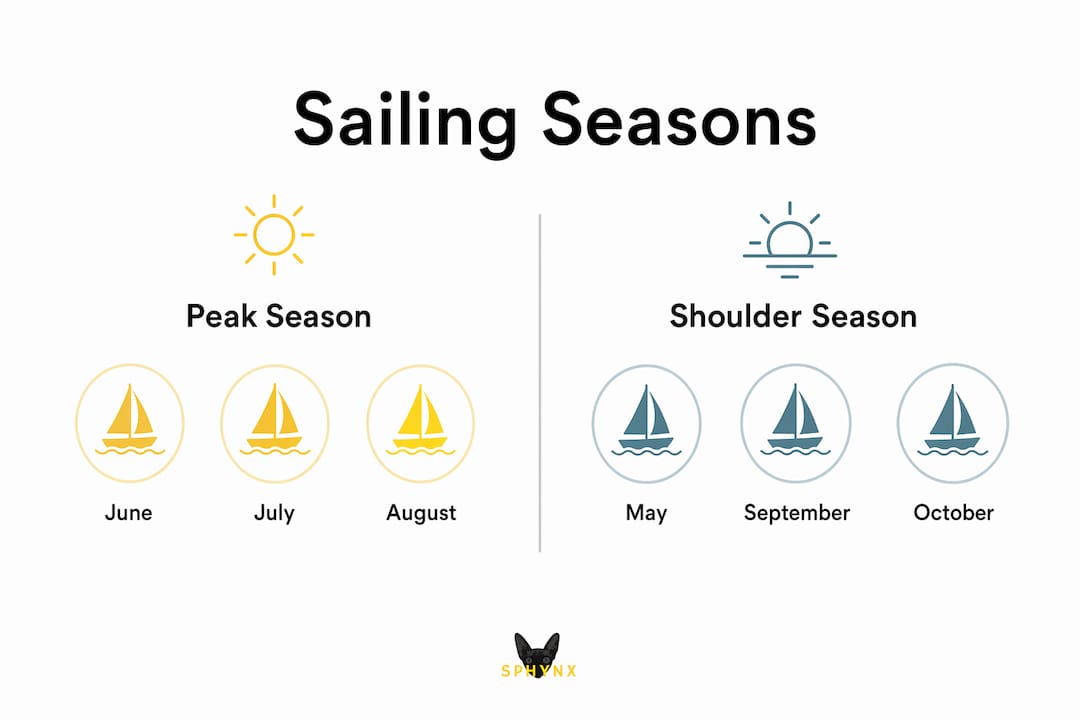
The Mediterranean sailing calendar in Barcelona divides cleanly into three phases: shoulder season in spring (May), peak season in summer (June to September), and late shoulder season in early October. Each phase offers a different balance of sea temperature, wind behaviour, and crowd density. Knowing which suits your priorities is the first decision to make.
June to September is the core window for most sailors. Skies are reliably clear, sea temperatures are comfortable for swimming, and the sailing conditions along the Costa Brava and Costa Daurada are generally settled. This is also when Barcelona’s nautical tourism peaks, meaning marinas are busier and charter prices reflect demand.

May and early October sit either side of that peak and offer a compelling alternative. Seas tend to be calmer, the coastline is less congested, and the atmosphere on the water is noticeably more relaxed. The trade-off is slightly cooler evenings and a marginally higher chance of variable winds, but for most sailors, that is a worthwhile exchange.
What sailing weather and sea conditions should you expect?
Barcelona’s sailing weather follows the classic western Mediterranean pattern: hot, dry summers with light to moderate winds, and transitional spring and autumn periods with more variable breezes and occasional strong episodes.
Sea temperatures through the season
Sea temperatures are a practical consideration for anyone planning to swim from the boat. Barcelona’s sea temperature peaks in September at around 25 to 26°C, making it the warmest month for in-water swimming despite being outside peak tourist season. June and July sit in the 21 to 23°C range, which is comfortable but noticeably cooler than late summer. What makes 2026 particularly notable is that sea temperatures reached 24.2°C to 24.5°C as early as May, following an extreme heatwave. That is an exceptional reading for spring, suggesting warm water can arrive earlier than historical averages in strong heat years.
Wind patterns and what they mean for planning
| Month | Typical wind conditions | Sea temperature | Crowd level |
|---|---|---|---|
| May | Variable, generally light | 18–22°C | Low |
| June | Light to moderate, settled | 21–23°C | Moderate |
| July | Light, occasional afternoon breeze | 23–24°C | High |
| August | Light, warmest and calmest | 24–25°C | Very high |
| September | Moderate, occasional gusts | 25–26°C | Moderate |
| Early October | Variable, increasing risk of strong wind | 22–24°C | Low |
The Tramontane and Mistral winds that affect the western Mediterranean can push gusts well above safe sailing thresholds, particularly in spring and autumn. Wind gusts exceeding 90 km/h have been recorded along the Catalan coast in March, with meteorological warnings issued across Catalonia. This is why March and November sit outside the recommended sailing window for most charter clients.
Pro Tip: Check the Agencia Estatal de Meteorología (AEMET) forecast 48 hours before departure. Their coastal marine bulletins are more granular than general weather apps and will flag wind advisories specific to the Barcelona maritime zone.
How do crowd levels shift from May to October?
The experience on the water changes significantly depending on when you go, and crowd density is one of the most underrated factors in that equation.
May is the hidden gem of the Barcelona sailing calendar. Marinas are quiet, anchorages along the Costa Brava are largely uncrowded, and you can reach spots like Sitges or the Garraf coast without competing for space. Air temperatures are warm enough for comfortable sailing but rarely oppressive. The sea is cooler than peak summer, but for sailors focused on the journey rather than swimming, this is a minor consideration.
June marks the transition into high season. The number of charter vessels on the water increases noticeably, particularly around the Port Olímpic area and along the popular routes towards Barceloneta and Badalona. Conditions remain excellent, and this month represents a strong balance between warmth and relative calm.
July and August are the busiest months by a significant margin. The combination of school holidays, international tourism, and corporate events means marinas operate at capacity. Sailing is still outstanding in terms of weather, but the experience is fundamentally different. Anchorages fill quickly, sunset spots attract multiple vessels, and booking a private charter requires significantly more lead time.
September is the month that experienced sailors consistently recommend. Warm days, cooler evenings, and fewer crowds combine with the highest sea temperatures of the year. The golden light in September is also exceptional for photography from the water, with the Montjuïc hillside and the Barcelona skyline catching the late afternoon sun at a particularly flattering angle.
Early October mirrors May in character. Shoulder season sailors find calmer waters and a more intimate atmosphere, though the window narrows as the month progresses and wind variability increases. Plan for early October departures rather than mid-month if you want the best of both worlds.
What are the best times of day to sail in Barcelona?
Choosing the right time of day can shape your experience as much as choosing the right month. Barcelona’s Mediterranean position means the light, temperature, and wind all shift meaningfully across the day.
Late afternoon to sunset (5 PM to 8 PM). This is the most atmospheric window for sailing in Barcelona. Sunset cruises typically depart around 7 to 8 PM in summer, lasting between 1.5 and 2.5 hours, and the combination of softer light, cooler air temperatures, and a relaxed pace makes this the most popular choice for private charters and shared sailing experiences. The Barcelona skyline viewed from the water at golden hour is genuinely one of the city’s finest perspectives.
Morning (9 AM to 12 PM). Morning departures offer the quietest conditions on the water. Wind is typically lighter before the sea breeze builds, which suits sailors who prefer a calmer passage. Prices for morning charters are often lower than sunset slots, and the cooler air is a genuine advantage in July and August when midday temperatures can exceed 30°C on deck.
Midday (12 PM to 4 PM). Midday sailing offers the best visibility and the most vivid colours for photography. The sea appears its deepest blue under direct overhead light, and the coastline detail is sharp. The downside is heat. In peak summer, deck temperatures can be uncomfortable without adequate shade, and the sea breeze that builds through the afternoon can create choppier conditions than morning or evening.
Pro Tip: If you are planning a sunset sailing experience in July or August, book at least three to four weeks in advance. The 7 PM to 8 PM departure slots fill faster than any other time of day during peak season.
How should you plan for weather variability and high winds?
The Mediterranean has a reputation for benign summer sailing, and that reputation is largely deserved. However, the Catalan coast is not immune to sudden wind events, and flexible itinerary planning is the single most practical step you can take before departure.
Key planning principles for managing weather risk:
- Build buffer days into your itinerary. If you have a fixed departure date and a non-negotiable sailing day, you have already removed your most important safety net. One extra day in Barcelona costs far less than a cancelled charter with no alternative.
- Choose operators with explicit weather reschedule policies. Not all charter companies handle weather cancellations the same way. Before booking, confirm in writing whether a wind advisory triggers a free reschedule or a credit, and what wind speed threshold applies.
- Monitor AEMET marine forecasts from 72 hours out. General weather apps do not capture the localised wind behaviour along the Catalan coast. The AEMET coastal bulletin covers the Barcelona maritime zone specifically and is updated twice daily.
- Understand the difference between a wind advisory and a prohibition. Spanish maritime authorities issue different levels of alert. A yellow advisory means caution; an orange or red alert typically means sailing is suspended for recreational vessels. Your operator should communicate this clearly, but knowing the framework yourself puts you in a stronger position.
The Mediterranean’s unpredictable wind patterns mean that even experienced sailors with well-maintained vessels can face disruption. The sailors who handle this best are those who planned for it from the start.
Key takeaways
The optimal time to sail Barcelona is May through October, with September offering the best combination of warm seas, reduced crowds, and exceptional light.
| Point | Details |
|---|---|
| Core sailing season | April to October, with June to September offering the most settled conditions. |
| Best shoulder months | May and early October deliver calmer seas, fewer vessels, and a more relaxed experience. |
| Sea temperature peak | September reaches 25 to 26°C, the warmest swimming conditions of the year. |
| Best time of day | Late afternoon to sunset offers the finest atmosphere, light, and comfort on the water. |
| Weather flexibility | Build buffer days and confirm reschedule policies before booking any charter. |
Why I always recommend sailing in September over August
Most people default to August. It is the warmest month, the school holidays align, and it feels like the obvious choice. After years of sailing the Barcelona coast and advising clients on timing, I have come to see August as the month that delivers the least for what it costs.
The marinas are at capacity. The anchorages you want, particularly around the quieter stretches south of Barceloneta or north towards the Maresme coast, are occupied by midday. Charter prices are at their annual peak. And the heat on deck between noon and four in the afternoon is genuinely punishing.
September changes all of that. The sea is actually warmer than August at most coastal buoys. The crowds thin noticeably after the first week. The light in the late afternoon is extraordinary, and the city itself feels calmer and more navigable when you return to port. For a luxury sailing experience where atmosphere and exclusivity matter, September is the clear choice.
My second recommendation is always May. Sailors who have done both consistently prefer it to July for the same reasons: fewer vessels, more space, and a pace that actually allows you to appreciate the coastline rather than queue for it.
The one thing I would add that most guides omit: the time of day matters as much as the month. A sunset departure in May will outperform a midday charter in August on almost every measure that makes sailing memorable.
— YellowRock
Sail Barcelona with Sphynxbcn
Sphynxbcn offers private and shared yacht charters along the Barcelona coast, with flexible scheduling designed around the Mediterranean’s variable conditions. Whether you are planning a private yacht tour for a special occasion or a shared sunset sail with friends, every experience is built around comfort, exclusivity, and the kind of local knowledge that makes the difference between a good trip and an exceptional one. Sphynxbcn’s team monitors weather conditions closely and accommodates reschedules when conditions require it, so your plans stay intact regardless of what the Catalan coast decides to do. Explore the full range of Barcelona sailing tours and find the option that fits your dates and priorities.
FAQ
What are the best months to sail in Barcelona?
June through September offer the most settled sailing conditions, with September combining warm sea temperatures of 25 to 26°C with noticeably fewer crowds than July or August. May and early October are strong alternatives for sailors who prioritise quieter waters over peak warmth.
Is Barcelona good for sailing in May?
May is one of the most underrated months for sailing in Barcelona. Seas are generally calm, marinas are uncrowded, and air temperatures are warm enough for comfortable sailing without the intense heat of midsummer.
What wind conditions should sailors expect in Barcelona?
Summer months bring light to moderate winds suited to comfortable sailing, while spring and autumn carry a higher risk of strong wind episodes. Gusts exceeding 90 km/h have been recorded along the Catalan coast in March, so checking AEMET marine forecasts before departure is standard practice.
What is the best time of day to sail in Barcelona?
Late afternoon to sunset is widely regarded as the finest window, combining cooler temperatures, softer light, and a relaxed atmosphere. Summer sunset cruises typically depart between 7 and 8 PM and last between 1.5 and 2.5 hours.
How far in advance should I book a Barcelona yacht charter?
For peak season departures in July and August, booking four to six weeks ahead is advisable, particularly for sunset slots. Shoulder season bookings in May or September typically require less lead time, though popular private charter dates still fill quickly.
Recommended
- barcelona sailing tours – SphynxBCN Luxury Tours
- The Ultimate Guide to Sunset Cruises: Experience Barcelona from the Sea – SphynxBCN Luxury Tours
- Family-Friendly Sailing: Tips for a Memorable Day at Sea – SphynxBCN Luxury Tours
- The Best Time of Year for Sailing in Barcelona’s Mediterranean Waters – SphynxBCN Luxury Tours