

TL;DR:
- Getting your yachting attire right requires selecting fabrics that dry quickly, breathe, and allow freedom of movement. It’s essential to layer appropriately and choose accessories like non-marking shoes, polarized sunglasses, and waterproof bags to ensure functionality and style. The key to effortless yachting fashion is opting for fewer high-quality pieces that blend nautical tradition with practicality and sustainability.
Few challenges in dressing are quite as demanding as getting your yachting fashion essentials right. The sea is unforgiving: salt spray, shifting winds, blazing Mediterranean sun, and the social expectation of looking polished throughout it all. What you wear on a yacht must work as hard as it looks good. This guide cuts through the noise to give you the specific garments, fabrics, and accessories that genuinely perform on the water, whether you are on a casual day sail off Barcelona or a sunset cocktail cruise with Sphynxbcn.
Tabla de Contenidos
- Key takeaways
- 1. Foundational criteria for yachting fashion essentials
- 2. Technical base layers and what makes them work
- 3. Mid-layers that earn their space in your bag
- 4. Outerwear built for the water, not just the look
- 5. Key yachting accessories that complete the look
- 6. Outfit combinations for every yachting occasion
- 7. Overlooked essentials and insider packing tips
- My honest take on getting yachting fashion right
- Step aboard with confidence: plan your perfect yacht experience
- FAQ
Key takeaways
| Point | Details |
|---|---|
| Fabric choice is foundational | Prioritise quick-drying, breathable materials over cotton alone to stay comfortable across changing conditions. |
| Layering outperforms single outfits | A technical base, light mid-layer, and waterproof shell covers every maritime scenario from midday sun to evening chill. |
| Footwear etiquette matters | Non-marking deck shoes are compulsory on most yachts; pack them separately to protect the deck and your reputation. |
| Accessories complete the look | Polarised sunglasses, wide-brimmed hats, and waterproof bags blend utility with sophisticated nautical style. |
| Match outfit to occasion | Adapt your ensemble from relaxed daywear to elegant yacht party attire by swapping mid-layers and accessories. |
1. Foundational criteria for yachting fashion essentials
Before you buy a single item, understanding what actually makes clothing work on a yacht saves you from expensive mistakes. The sea creates a micro-climate that changes hourly. Spray, sun, wind, and activity levels fluctuate constantly, so your wardrobe needs to respond in kind.
The key selection criteria for any piece of luxury yacht attire are:
- Breathability and moisture management. Fabrics that trap sweat leave you uncomfortable and cold once temperatures drop. Look for moisture-wicking weaves in base layers and lightweight construction throughout.
- Quick-drying performance. You will encounter spray, condensation, and the occasional splash. Quick-drying fabrics and flexibility handle changing maritime conditions far better than absorbent cotton alone.
- Stretch and ergonomic cut. Climbing on and off a vessel, adjusting lines, or simply moving around a tilting deck demands freedom of movement. Rigid cuts and heavy denim have no place here.
- Layering compatibility. Each piece should work with the others in your kit. A technical tee that sits awkwardly beneath a mid-layer defeats the purpose of building a proper system.
- Appropriateness for the setting. Yacht etiquette is real. Certain vessels have formal codes; others are relaxed. Your clothing signals whether you understand and respect the environment you are in.
Pro Tip: When assessing fabrics in a shop, hold the material up to light. A tight, even weave with slight sheen usually signals quick-dry synthetic performance. Loose, opaque weaves are typically pure cotton and will stay damp for hours.
2. Technical base layers and what makes them work
Base layers are the unsung foundation of any solid sailing outfit idea. Most people spend their budget on visible outer pieces and neglect what sits against the skin. That is a mistake.
A three-layer system from Helly Hansen adapts to variable wind and temperature conditions on the water. The base layer is the first and most personal part of that system. It must wick moisture away from the skin, dry fast, and maintain its stretch across a full day of movement.
For warmer Mediterranean conditions above 20°C, a lightweight moisture-wicking polo or technical tee in a synthetic or blended fabric is ideal. These double beautifully as the visible layer during sunny midday hours, which means your base layer also needs to look the part. Opt for classic navy, white, or pale blue to keep the nautical aesthetic intact without looking like you raided a sportswear catalogue.
For cooler mornings or spring sailings, a base layer rated for +10°C to +30°C conditions maximises thermal comfort and moisture management. Choose close-fitting but not restrictive cuts. And consider the environmental angle: recycled polyester blends deliver performance with a reduced environmental footprint, which suits the growing number of eco-conscious yacht-goers.
3. Mid-layers that earn their space in your bag
A mid-layer is what separates the genuinely prepared yacht-goer from the person shivering with a wet jumper at sunset. The best mid-layers for yachting are lightweight, compressible, and warm without bulk.
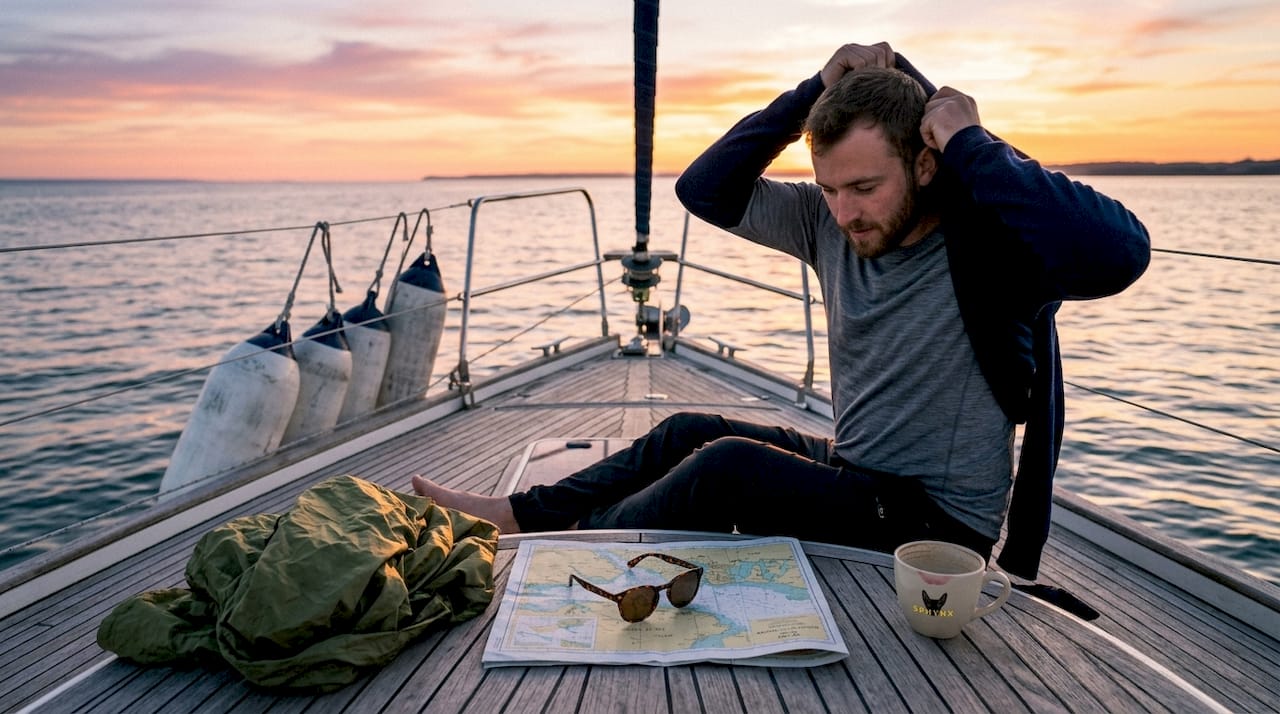
Merino wool sits at the top of the list for recreational and social yachting. It regulates temperature remarkably well, resists odour between washes, and looks polished enough to wear directly into a cocktail hour. A fine-knit merino crewneck in cream or navy reads as elegant aboard any vessel.
Lightweight fleece-lined gilets are the more casual alternative. They layer cleanly over a technical tee without restricting arm movement, and they pack into almost nothing. Proper layering allows adaptation to the rapid weather changes experienced at sea, and a gilet you can clip to your bag when not wearing it is the embodiment of that philosophy.
Avoid thick cotton sweatshirts. They absorb moisture, lose their insulating properties when damp, and add unnecessary bulk. One well-chosen merino piece outperforms three cheap cotton layers every time.
4. Outerwear built for the water, not just the look
This is where most yacht fashion guides get it wrong. They either recommend offshore racing gear that turns a social sail into an expedition, or they suggest fashion jackets that let spray straight through. Neither extreme works.
Lightweight waterproof shells with breathable membranes outperform heavy offshore jackets for recreational coastal cruising. They block wind and spray without causing you to overheat during active moments or look as though you are crewing a transatlantic race. A well-cut waterproof jacket in a muted navy or stone colour transitions seamlessly from the deck to the harbour-side restaurant.
Look for packable construction: a jacket that compresses into its own pocket or a small pouch takes up almost no room in your bag and earns its place on every single outing. Pit zips or underarm vents are worth having if you tend to run warm. Sealed seams are non-negotiable for anything that calls itself genuinely waterproof.
5. Key yachting accessories that complete the look
Accessories do double duty on a yacht: they protect you and they signal that you know what you are doing. Get them right and your entire outfit reads as intentional rather than improvised.
- Deck shoes and boat shoes. Boat shoes protect teak decks and provide grip across wet surfaces. Non-marking white or beige soles are the standard. Loafer-style deck shoes in tan leather or navy canvas are the most versatile choice, functioning equally well at sea and in a harbour-side setting.
- Wide-brimmed hats and caps. A structured canvas bucket hat or a wide-brimmed linen hat protects your face and neck from Mediterranean sun while contributing to an authentically nautical silhouette. Avoid floppy fabric hats that catch the wind.
- Polarised sunglasses. Quality polarised lenses reduce intense sea glare and protect your eyes across a full day on the water. Tortoiseshell frames with amber or grey lenses are a particularly good pairing for both function and style.
- Waterproof bags and totes. A canvas-and-leather tote looks lovely at departure but a single wave can ruin everything inside it. A waxed canvas or coated fabric tote offers the aesthetic with genuine weather resistance.
- Marine-safe jewellery and watches. Saltwater corrodes quickly. Choose stainless steel, titanium, or resin-cased watches and jewellery that handles moisture without tarnishing.
Pro Tip: Pack your deck shoes in a separate bag rather than mixing them with your regular footwear. It is a recognised best practice in yacht etiquette and keeps your other shoes clean and dry throughout the trip.
6. Outfit combinations for every yachting occasion
The table below shows how to adapt your yachting wardrobe across three common scenarios, shifting from relaxed to formal without rebuilding your packing list from scratch.
| Occasion | Base layer | Mid-layer | Outer layer | Key accessories |
|---|---|---|---|---|
| Casual day sail | Moisture-wicking polo | Lightweight gilet | Packable waterproof shell | Deck shoes, cap, polarised sunglasses |
| Sunset cocktail cruise | Linen or cotton-silk shirt | Fine merino crewneck | Tailored softshell jacket | Leather deck loafers, wide-brimmed hat, watch |
| Formal yacht party | Tailored shirt or silk blouse | Elegant knitwear | Structured blazer (keep onshore) | Heeled sandals for pre-boarding, flats aboard |
A few principles to carry across all three occasions:
- Natural fibre fabrics like linen suit yacht parties and casual cruising beautifully. Linen wrinkles are entirely acceptable in a nautical context. Cotton-silk blends deliver softness and breathability for evening events.
- Neutral nautical colours, specifically navy, white, cream, and pale blue, work across every formality level and always look deliberate rather than accidental.
- For formal events, change into heeled sandals once you board and switch to flats for actual time on deck. Heels and teak do not coexist peacefully.
7. Overlooked essentials and insider packing tips
Most yachting packing lists focus on what to wear and miss the practical logistics of travelling with a refined wardrobe. These details matter more than people expect.
- Use soft-sided luggage only. Hard-shell cases do not fit in yacht storage compartments. A soft duffel or a weekend bag with compression straps is the standard choice. A curated packing approach for leisure travel prioritises flexibility and ease of access over maximum capacity.
- Choose wrinkle-resistant fabrics. Merino wool, performance polyester blends, and high-quality linen all travel exceptionally well. You will not have access to a steam iron aboard most charter yachts.
- Pack a spare base layer. If you get wet, having a dry layer to change into transforms a cold, miserable afternoon into a comfortable one. One spare is enough; two is excessive.
- Think about your sustainable yachting choices. Opt for pieces made with recycled fibres or organic cotton where possible. Fewer, better-quality garments that last multiple seasons are both more practical and more responsible.
- Apply sunscreen before dressing. Products containing oxybenzone bleach and damage many technical fabrics and natural fibres. Apply, let it absorb fully, then dress. Your clothes will last considerably longer.
The golden rule across all of this is comfort elevating the luxury sailing experience. Style on the water is inseparable from how you actually feel throughout the day.
My honest take on getting yachting fashion right
I have watched guests arrive on luxury yachts looking immaculate and leave looking defeated because they dressed for the photograph rather than the reality. The sea has a way of exposing exactly which choices were made for appearances and which were made with genuine thought.
What I have found works, without exception, is building your outfit from the skin outward and choosing one excellent version of each layer rather than several mediocre ones. A single high-quality merino mid-layer will outperform three disposable cotton options in every measurable way. The same logic applies to footwear: one pair of proper deck shoes serves you better than two pairs of fashionable shoes that will mark the deck and leave you sliding on a wet surface.
The nautical colour palette exists for a reason beyond tradition. Navy, white, and cream reflect heat, photograph beautifully in Mediterranean light, and pair with almost everything. Resist the urge to overthink it. The guests who look most effortlessly stylish aboard a yacht are almost always those who chose fewer, better pieces and then got on with enjoying the experience.
Sustainability is worth factoring in honestly too. A yacht trip is already a significant environmental occasion. Choosing garments made with recycled content or durable natural fibres is a small but meaningful act of consistency.
— YellowRock
Step aboard with confidence: plan your perfect yacht experience
Knowing your yachting fashion essentials is only part of the picture. Where you sail matters just as much as what you wear doing it.

Sphynxbcn offers private yacht tours along the Barcelona coastline that are designed for guests who care about every detail, including how they look and feel on board. The team provides a curated Barcelona yacht packing guide to help you prepare a wardrobe that works beautifully for the Mediterranean climate and occasion. Whether you are planning a sunset cruise, a private celebration, or a corporate event at sea, Sphynxbcn makes the experience feel as polished as you look. Explore the full range of luxury yacht rentals in Barcelona and find the perfect outing for your next sailing adventure.
FAQ
What are the most important yachting fashion essentials?
The core wardrobe centres on a moisture-wicking base layer, a compressible mid-layer such as merino wool, and a lightweight waterproof jacket, paired with non-marking deck shoes and polarised sunglasses.
What shoes should I wear on a yacht?
Deck shoes or boat shoes with non-marking white soles are the standard choice. Boat shoes protect deck surfaces and provide the grip needed on wet surfaces without damaging teak or gel-coat finishes.
What fabrics work best for yachting attire?
Quick-drying synthetics and merino wool are the best performers on the water. Linen and cotton-silk blends work well for yacht parties and calmer cruising where technical performance is less critical.
How do I dress for a formal yacht party?
A tailored linen shirt or silk blouse paired with slim trousers or a midi skirt reads as sophisticated. Swap heeled sandals for flats once you board, and carry a fine-knit layer for when the sun drops.
Is layering really necessary for summer sailing?
Yes. Even in high summer, temperatures at sea drop significantly after sunset and wind chill intensifies on the water. Layering adapts to rapid weather changes at sea and is the single most practical strategy for staying comfortable from morning departure to evening return.