

TL;DR:
- The success of a Mediterranean yacht trip depends on personalized itineraries tailored to group goals and dynamics.
- Clustering destinations within two to three hours by sea provides balance between variety and relaxation.
- Flexibility and spontaneity are key to creating memorable, luxurious yachting experiences.
How to select yacht itineraries for a perfect Mediterranean escape
Picture arriving by private yacht to a secluded Menorcan cove at golden hour, the water a shade of turquoise you thought only existed in photographs, and not another vessel in sight. Now contrast that with a rigid group tour that herds you between overcrowded ports on a timetable nobody agreed to. The difference between these two experiences is not the yacht itself. It is the itinerary. Designing a personalised Mediterranean yachting journey requires deliberate thinking about your goals, your group, your preferred rhythm, and the expertise of the right people. This guide walks you through every decision that separates an average charter from a genuinely exceptional one.
Table of Contents
- Understanding your goals and group dynamics
- Choosing clustered destinations and optimal routes
- Timing, weather, and event considerations
- Working with brokers and customisation essentials
- Our take: Why spontaneity is the true luxury
- Discover tailored yacht experiences in the Mediterranean
- Frequently asked questions
Key Takeaways
| Point | Details |
|---|---|
| Custom fits group needs | Tailor each itinerary to your group’s size, interests, and reasons for chartering. |
| Plan for flexibility | Blend structured stops with time for spontaneous adventures and relaxation. |
| Clustered routes work best | Choose destination clusters in the Mediterranean to minimise sailing time and maximise leisure. |
| Early booking is key | Reserve prime yachts and event access by planning 9–12 months ahead, or more for special occasions. |
| Expert brokers add unique value | Work with respected brokers for hidden gems, the right crew, and smooth contract handling. |
Understanding your goals and group dynamics
Before you even look at destinations, it is crucial to lay out what you want out of your voyage. This foundational step shapes every decision that follows, from the size of vessel you need to the ports you choose to skip entirely.
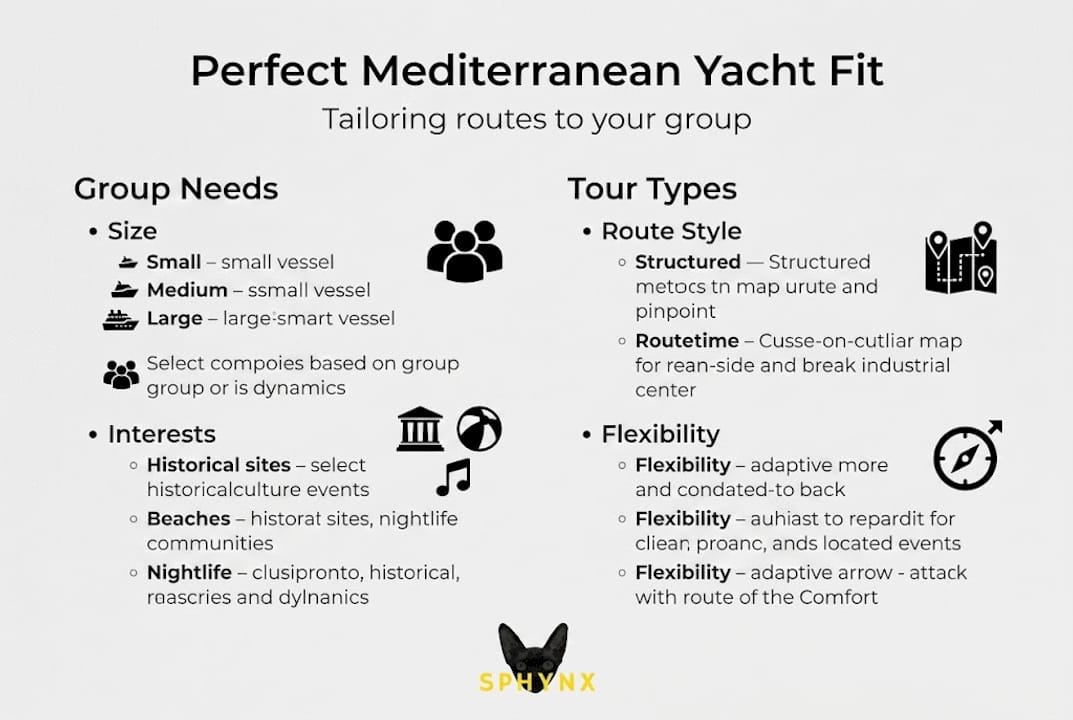
The first question to answer honestly is: what is the primary purpose of this trip? The answer will look completely different depending on who is asking. A couple celebrating a milestone anniversary wants seclusion, candlelit dinners on deck, and unhurried mornings. A family with teenagers wants snorkelling bays, beach clubs, and enough activity to keep everyone engaged. A corporate group seeking to reward high performers or host client entertainment needs reliable connectivity, structured port access, and catered dining that impresses. As one yachting specialist notes, corporate groups require structured ports, while couples benefit most from secluded coves.
Once you have identified the purpose, look closely at your group. Consider:
- Group size: A party of four has very different spatial and social needs than a group of sixteen.
- Age range: Young children need calm anchorages and safe swimming spots. Elderly guests may need easier boarding access and shorter daily sailing legs.
- Activity preferences: Are your guests water sports enthusiasts, gastronomes, history lovers, or people who simply want to read undisturbed on a sun deck?
- Energy pace: Some guests thrive on a packed schedule with a new destination every day. Others need two nights in the same bay to feel truly rested.
Matching these dynamics to the types of yacht tours available will save you considerable frustration later. For instance, a high-energy group of friends may suit a sailing route through the Balearics with daily beach club stops, while a couple wanting romance is better served by a slower Corsican itinerary with private anchorages.
Pro Tip: Build roughly 40% flexibility into your schedule from the outset. Weather shifts, unexpected discoveries, and simple changes of mood are all part of what makes Mediterranean sailing feel alive. An overpacked itinerary turns a luxury escape into a logistics exercise.
Mapping your group’s collective personality before you open a chart is the single most powerful thing you can do. Get this right, and every subsequent decision becomes considerably easier.
Choosing clustered destinations and optimal routes
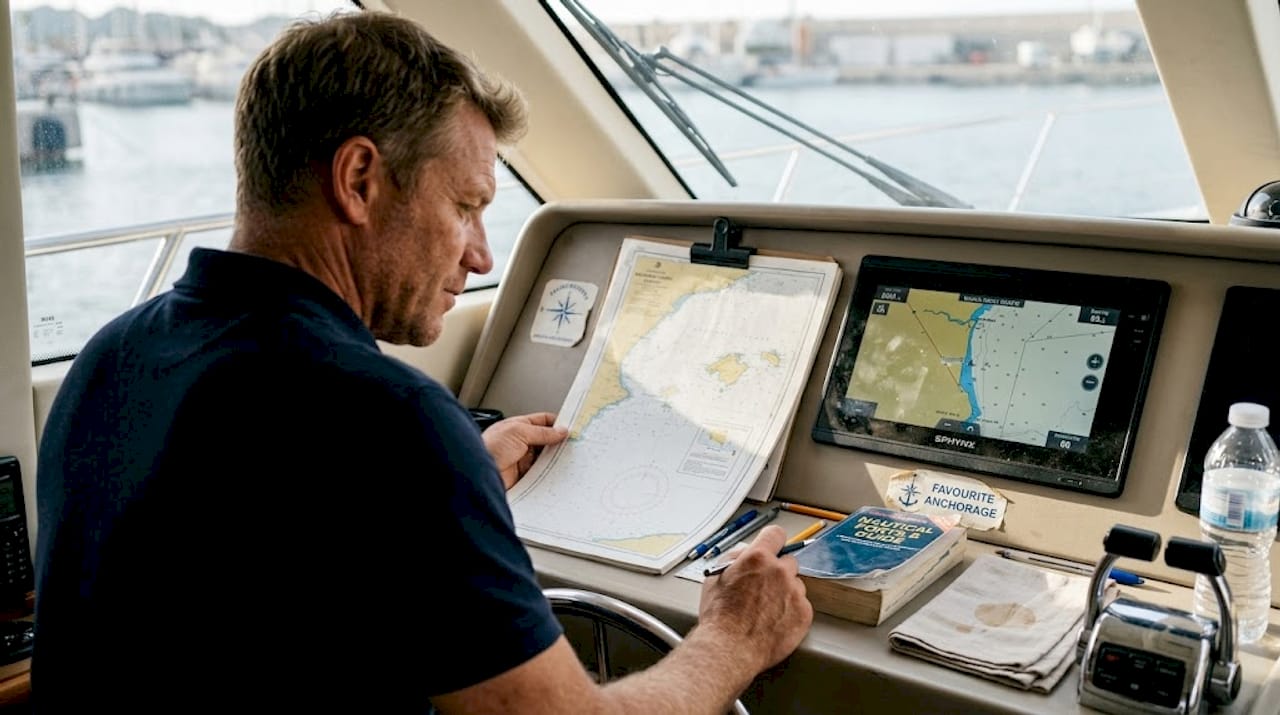
Once you know your group’s priorities, you can match them with Mediterranean regions that deliver exactly what you need. The defining principle here is clustering: selecting destinations that sit within two to three hours of each other by sea. Short daily cruises of two to three hours between clustered destinations are ideal for maintaining relaxation without sacrificing variety.
Here is a practical guide to how many stops you can realistically enjoy based on your total charter duration:
| Trip duration | Recommended ports or islands | Notes |
|---|---|---|
| 3 to 4 days | 2 to 3 stops | Best for one cluster only |
| 7 days | 4 to 6 stops | Ideal for first-timers |
| 10 to 14 days | 7 to 10 stops | Suitable for two clusters |
| 14 to 21 days | 10 to 15 stops | Full regional coverage possible |
The Mediterranean’s most compelling clusters each carry a distinct character. Matching your mood to the right region makes a tangible difference to your overall experience:
- Balearic Islands (Ibiza, Formentera, Mallorca, Menorca): Outstanding for groups seeking a balance of lively beach clubs and genuinely remote anchorages. Formentera in particular offers flat, gin-clear water that rivals anything in the Caribbean.
- Greek Cyclades (Mykonos, Santorini, Paros, Naxos): Best suited to those drawn to whitewashed architecture, ancient history, and vibrant social scenes. The meltemi wind adds an exhilarating sailing dimension.
- French and Italian Riviera with Corsica: Perfectly positioned for privacy on luxury charters, Corsica’s wild coastline sits alongside the Riviera’s glamour, giving you the best of both moods within a single itinerary.
- Amalfi Coast and Sicily: For those who value gastronomy and culture as highly as scenery. Anchovies cured in Cetara, volcanic wines from the Aeolian Islands, and Greek temples at Agrigento are rewards entirely unavailable elsewhere.
For yacht experience ideas tailored to specific regions, speaking with an experienced planner early in the process pays dividends. They will know which bays fill up by mid-morning in July, and which ones remain pristine throughout the season.
Pro Tip: Opt for shoulder season (May to June or September to October) for noticeably quieter anchorages and potential cost savings of up to 30% compared with peak summer rates.
Timing, weather, and event considerations
With your regions selected, timing becomes your next puzzle, affecting everything from cost to ambience and from safety to social atmosphere.
Mediterranean weather is broadly reliable, but regional variations matter enormously when planning. The meltemi in the Aegean blows strongly from July through August, which creates spectacular sailing conditions but also makes certain exposed anchorages uncomfortable. The Mistral in the Gulf of Lion can arrive with little notice in spring and autumn, pushing boats to south-side anchorages for shelter. Planning your routes with these patterns in mind is not pessimism. It is smart seamanship.
Local events are a double-edged consideration. They can be the highlight of your entire trip or a logistical headache, depending on how well you anticipate them:
- Monaco Grand Prix (late May): One of the most spectacular events in the world when viewed from a yacht in the harbour. However, berths and anchorages must be booked 18 months in advance at minimum, and prices surge dramatically.
- Cannes Film Festival (mid-May): The Golfe Juan anchorage offers a ringside seat to the spectacle without paying Port Canto prices, but you must plan months ahead.
- Regatta weeks (Cowes, Palma, Portofino): These can add exciting colour to an itinerary for sailing enthusiasts, or significant congestion if you simply want a quiet harbour.
- Local festivals: Smaller village festivals throughout July and August often coincide with the most animated local dining, music, and culture. Your captain and broker will know these.
Here is a straightforward comparison to inform your seasonal decision:
| Factor | High season (July to August) | Shoulder season (May to June, September to October) |
|---|---|---|
| Weather reliability | Excellent | Very good, occasional variation |
| Anchorage crowding | High | Low to moderate |
| Charter pricing | Peak rates | Up to 30% savings |
| Restaurant availability | Book weeks ahead | Easy, spontaneous dining possible |
| Nightlife and events | Peak | Quieter but often more authentic |
“The finest Mediterranean itineraries are built around the calendar, not despite it. Understanding when and where to be is as important as the destination itself.”
If you want to understand how seasonal timing influences your overall sailing benefits and wellbeing on board, that context is worth exploring before you finalise any dates.
Working with brokers and customisation essentials
Making the most of your yacht adventure depends on who helps shape your journey. The right broker unlocks genuine customisation that a self-planned itinerary simply cannot replicate.
Working with a reputable broker is not a concession to complexity. It is the most efficient investment you can make. Studies show that 65% of affluent yachters place privacy as their primary criterion when selecting a charter, and a skilled broker is the person most capable of designing the itinerary that delivers it. Here is how the process typically unfolds:
- Initial brief: Share your group profile, dates, budget, and desired mood. The better your brief, the more targeted the broker’s response.
- Yacht selection: Your broker matches vessel type, size, and crew personality to your requirements. This is where experience counts most.
- Contract and APA: The standard framework is an MYBA contract with an Advanced Provisioning Allowance (APA) of 25 to 35% of the charter fee, covering fuel, provisions, and dockage throughout your trip.
- Itinerary co-design: Your broker draws on insider knowledge of quieter anchorages, lesser-known bays, and local contacts that no online planner can match.
- Pre-departure refinement: In the weeks before departure, itinerary details are refined with your captain, who will adapt plans based on real-time weather and conditions.
For peak season charters, engage your broker nine to twelve months in advance. For off-peak travel, six months is generally sufficient, though earlier always gives you more choice.
The most important quality to cultivate throughout this process is adaptability. Experienced yachters understand that the ideal itinerary is roughly 60% structured and 40% spontaneous, leaving meaningful room for last-minute course changes. Overplanning is among the most common mistakes first-time charterers make.
A few additional essentials to confirm with your broker before signing:
- Crew certifications and language capabilities
- Provisioning standards and dietary accommodation
- Water toy inventory and diving equipment availability
- Tender specification for reaching shallow or remote anchorages
Familiarity with basic yacht etiquette tips will also help your group integrate seamlessly with the crew and make the overall dynamic more enjoyable for everyone on board. And when you are ready to explore a fully exclusive sailing guide, that resource offers deeper insight into what separates genuinely elevated charters from merely expensive ones.
Our take: Why spontaneity is the true luxury
Template itineraries are a useful starting point, but the most memorable Mediterranean voyages we have witnessed share one quality: they left room for the unexpected.
The conventional wisdom in charter planning pushes towards precision. Every port logged, every dinner reservation made, every water toy activity scheduled. But the richest experiences consistently come from combining structure with the freedom to alter course when something better presents itself: a fisherman’s tip about a hidden bay, a passing superyacht captain’s recommendation, or simply the desire to stay one more night in a place that surprised you.
True affluence in yachting is not about ticking off the most prestigious ports. It is about having the comfort and the resources to go where the day leads you. Increasingly, our most discerning guests tell us that the moments they remember longest were unscheduled ones. The local family who invited them ashore for a meal. The dawn swim in a cove they would never have found had they stayed on plan.
“The path less planned is often the one most worth sailing.”
Build structure, absolutely. Then protect the white space with equal conviction.
Discover tailored yacht experiences in the Mediterranean
If you are ready to experience the Mediterranean your way, true luxury is closer than you think.
At Sphynx BCN, we specialise in translating your vision into a precisely designed voyage. Whether you are planning an intimate private yacht tour for two, a landmark celebration with close friends, or a corporate event that leaves a lasting impression, our team provides personal consultations to build itineraries around your specific needs. Browse our curated experience ideas and discover why discerning travellers return to us season after season. When privacy, flexibility, and genuine personalisation matter, explore the full range of charter privacy benefits we bring to every engagement.
Frequently asked questions
How far in advance should I book a Mediterranean yacht itinerary?
Book at least nine to twelve months before peak season, and allow up to 18 months for events such as the Monaco Grand Prix, where berth availability is extremely limited.
What is the ideal length for a first-time yacht itinerary?
A seven to ten day itinerary strikes the right balance for first-timers, offering enough variety to feel adventurous without the fatigue of constant movement.
What costs should I expect beyond the charter fee?
Budget for an APA of 25 to 35% on top of your charter fee, which covers fuel, food, harbour fees, and other variable expenses during the trip.
Is it better to travel in high or shoulder season?
Shoulder season offers quieter anchorages and up to 30% savings, while high season delivers peak weather and the most vibrant social atmosphere if that suits your group.
Can my itinerary be changed during the charter?
Absolutely. The best itineraries retain 40% spontaneity, allowing your captain to adapt in real time to weather changes, new discoveries, or simply your mood on the day.