

TL;DR:
- Many first-time sailors underestimate how different sailing trips are from other holidays, requiring proper preparation for safety and comfort. Preparing smartly involves packing light with a soft bag, layering clothing, planning flexible routes, checking safety gear, and managing shared spaces responsibly. Starting with short, flexible coastal trips helps build skills and resilience, leading to more enjoyable and memorable sailing experiences.
Most people who have never sailed before underestimate exactly how different it is from any other kind of holiday. Knowing how to prepare for a sailing trip before you step aboard is what separates a genuinely memorable experience from a stressful one. Space is tight, weather is unpredictable, and the open sea has its own set of rules. This guide covers everything from packing smart and planning your route to safety checks and managing shared spaces, so you can focus on what actually matters: enjoying every nautical mile.
Table of Contents
- Key takeaways
- How to prepare for a sailing trip: packing smart
- Planning your route and itinerary
- Safety checks before you set sail
- Managing shared spaces and expectations
- What I have learned from preparing for sailing trips
- Set sail with Sphynxbcn
- FAQ
Key takeaways
| Point | Details |
|---|---|
| Pack light, pack soft | Use soft-sided bags under 70 litres and keep total weight between 8 and 12 kg for cabin compatibility. |
| Layer your clothing | Build a three-layer system of moisture-wicking, insulating, and waterproof garments to handle shifting conditions. |
| Plan flexibly | Build buffer time and alternative anchorages into your itinerary rather than a rigid day-by-day schedule. |
| Check safety gear first | Inspect rigging, navigation equipment, and safety kit before departure, and carry critical spare parts. |
| Set shared expectations | Discuss roles, storage use, and etiquette with your captain and fellow crew before casting off. |
How to prepare for a sailing trip: packing smart
Packing for a sailing trip is completely different from packing for a hotel stay. Hard-sided suitcases are genuinely impractical aboard a boat because cabin storage is irregular and limited, and a rigid case cannot be folded into a narrow locker once emptied. The solution is a soft duffel bag. Aim for under 70 litres and 8 to 12 kg total weight. That limit is not arbitrary. It reflects the actual size of most under-bunk and quarter-berth storage spaces found on sailing yachts.
Beyond the bag itself, what goes inside matters just as much. Cotton clothing is a poor choice at sea because it absorbs moisture and holds it. Synthetic or merino wool fabrics dry in 2 to 3 hours compared to eight or more hours for cotton in a humid marine environment. That difference matters enormously when you are cycling through the same few pieces of clothing over several days.
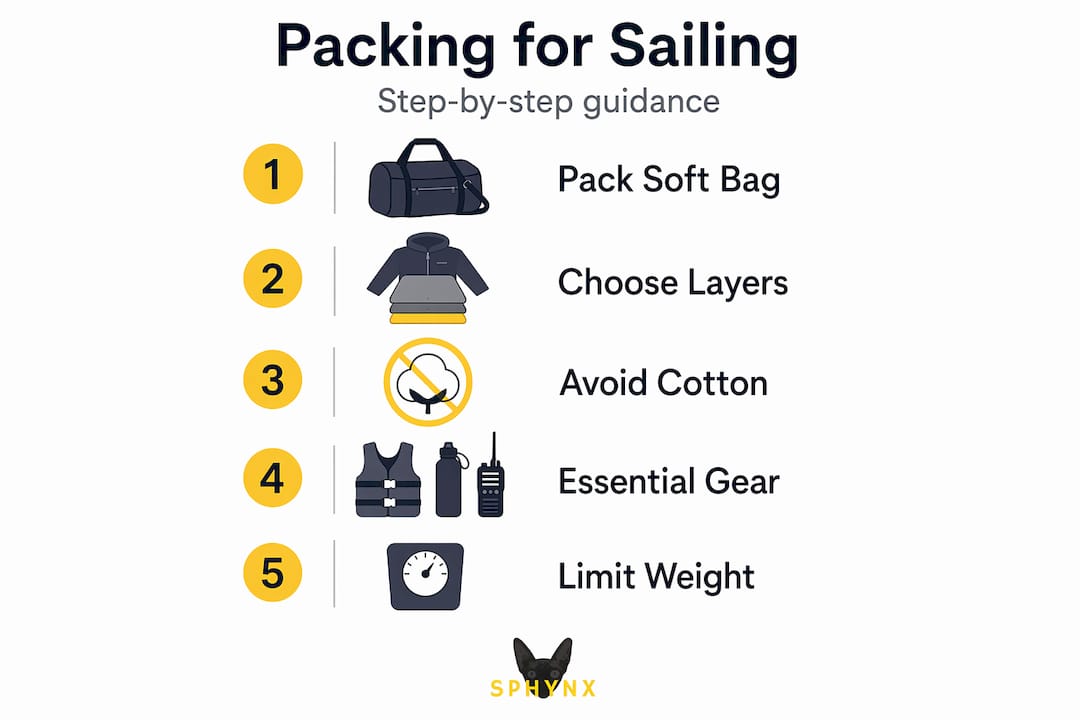
Think about your sailing attire as a layering system with three distinct roles. The base layer handles moisture management, pulling sweat away from your skin. The mid-layer provides insulation on cooler mornings or evenings. The outer shell defends against wind and water. Cockpit temperatures can drop 5 to 8 °C after sunset, so that insulating layer earns its place even on a warm Mediterranean trip.
Here is a practical sailing essentials checklist to work from:
- Footwear: Non-marking, rubber-soled deck shoes with good grip. Avoid flip-flops on deck.
- Sun protection: High-SPF sunscreen, a wide-brimmed hat, UV-protective sunglasses, and a buff or neck gaiter.
- Rainwear: A quality sailing jacket suited to your conditions. Coastal jackets balance waterproofing and comfort; offshore jackets offer maximum waterproof integrity for rough or prolonged exposure.
- Layers: Two to three moisture-wicking tops, one fleece or softshell, lightweight trousers, and at least one warm hat.
- Seasickness remedies: Tablets or patches, taken the evening before departure for full effectiveness.
- Dry bag or waterproof pouch: For your phone, documents, and anything you cannot afford to get wet.
For detailed guidance on what to bring specifically for a Barcelona charter, Sphynxbcn has a Barcelona yacht packing list worth bookmarking before you book.
Pro Tip: Pack versatile pieces that can layer over each other rather than individual outfits. Four days of sailing does not require four separate outfit combinations. It requires three good base layers, one solid mid-layer, and one reliable outer shell.
Planning your route and itinerary
A sailing itinerary is not a train timetable. You cannot simply list ports and times and expect the sea to comply. Flexible sailing itineraries that allow for shifting wind and weather conditions are both safer and more enjoyable than rigid plans that put you in a position of fighting the elements just to stay on schedule.
Here is how to approach itinerary planning properly:
- Study the weather patterns for your region and season. Mediterranean sailing in July is a very different proposition from March. Prevailing winds, fog patterns, and swell height vary significantly by month. Consult marine weather forecasts, not standard land-based forecasts.
- Identify alternative anchorages at each stage. For every intended port or anchorage, know your fallback option. If conditions deteriorate or a harbour is full, you need a realistic alternative within reasonable sailing distance.
- Build buffer time into every leg. Blocking one or two days as flex days is not pessimism. It is good planning. Delays from headwinds, unexpected calms, or a mechanical issue should be absorbed by buffer time, not by rushing later legs.
- Discuss the plan with your captain before you leave. They will know local conditions, tidal patterns, and seasonal variations that no app can replicate. Clear communication with your captain about what you want from the trip shapes both the route and the overall experience.
- Distinguish between coastal and offshore requirements. A coastal hop between ports requires different preparation from a longer offshore passage. Coastal routes offer more bail-out options; offshore legs demand greater self-sufficiency and more thorough provisioning.
For anyone new to planning routes, the Sphynxbcn sailing itinerary guide for 2026 covers Mediterranean-specific considerations in useful depth.
Safety checks before you set sail
Safety preparation is the part of the sailing trip checklist that first-timers most often skim. This is a mistake. The sea is forgiving until it is not, and the difference is usually preparation.
Pre-departure safety checks should cover the following:
- Rigging and sails: Inspect standing and running rigging for chafe, corrosion, or fatigue. Pre-departure inspection of rigging, sails, and navigation equipment is standard practice before any passage. Replace worn components before you go, not when you are three days from port.
- Engine and fuel systems: Check oil levels, coolant, belts, and filters. Carry spares for each.
- Safety equipment: Life jackets for all crew, tethers and harnesses, flares (within their expiry date), a life raft in serviceable condition, first aid kit, and a functioning VHF radio.
- Navigation equipment: GPS chartplotter, compass, paper charts as backup, and a reliable AIS transponder.
- Electrical systems: Battery voltage should rest between 12.6V and 12.8V and should never be allowed to drop below 12.0V, which causes irreversible damage to 12-volt systems.
Here is a quick reference for your safety gear review:
| Category | What to check | Action if issue found |
|---|---|---|
| Rigging | Wear, corrosion, broken strands | Replace before departure |
| Life jackets | Inflation mechanism, service date | Service or replace |
| Flares | Expiry dates | Replace expired flares |
| VHF radio | Function, battery charge | Charge or replace battery |
| Battery bank | Resting voltage (12.6V to 12.8V) | Charge, investigate if low |
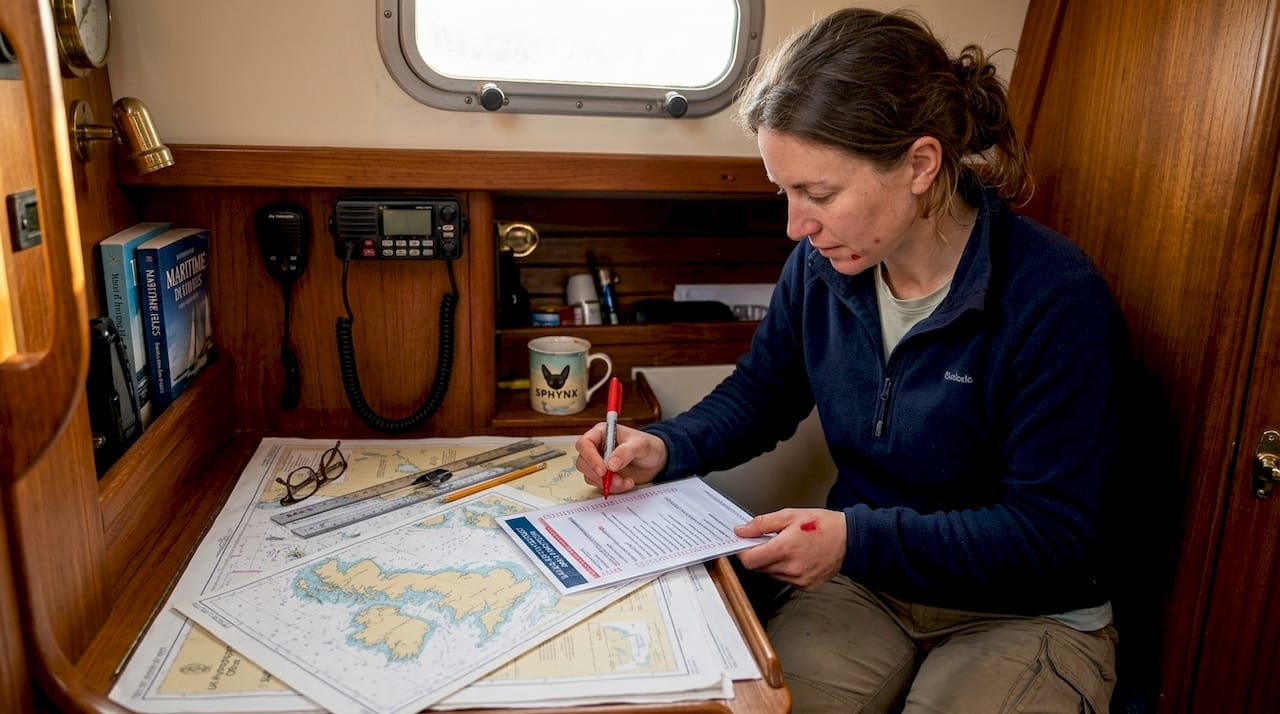
Physical and mental preparation matters too. Building offshore experience through shorter coastal passages before attempting longer voyages helps you understand watch systems, fatigue management, and sail handling in lower-stakes conditions. If you are new to sailing, consider a recognised sailing course before your first significant trip.
Pro Tip: Carry a provisioning contingency plan. A bulk stores and reusable containers approach reduces plastic waste and keeps you prepared if you cannot reach port as planned.
Managing shared spaces and expectations
Preparing for a sailing trip is not only about gear and safety. It is about people. A yacht is an extraordinarily small space for multiple adults to share continuously, and how you navigate that social dynamic shapes the entire experience.
Before you board, go through these points with your captain and fellow crew:
- Roles and responsibilities: Know what is expected of you. Are you a guest, a working crew member, or somewhere in between? Clarify before departure.
- Storage discipline: Assign storage spaces clearly. Personal items left in shared areas cause friction quickly. Learn the layout and keep your gear in your allotted space.
- Noise and rest schedules: If there is a watch system, respect quiet hours. Sleep matters at sea, and disrupting someone’s rest before their watch is a genuine safety issue.
- Environmental responsibility: Limit single-use plastics and be deliberate about waste. Most marinas and anchorages have strict rules about waste disposal, and responsible behaviour reflects well on the whole group.
- Flexibility as a given: Conditions change. Plans change. The group that adapts without drama is the group that enjoys the trip.
Sphynxbcn’s Mediterranean yacht etiquette guide is a good read for anyone sharing a charter with guests or crew they do not know well. The small adjustments in behaviour it describes make a noticeable difference aboard.
What I have learned from preparing for sailing trips
Over years of sailing Mediterranean coastlines and beyond, I have watched the same pattern play out repeatedly. First-timers overpacked, underprepared on safety, and arrived with fixed expectations about where they would go and when. By day three, reality had intervened. The wind did not cooperate, the planned anchorage was full, and someone’s cotton sweatshirt was still damp from the first day.
What I have found actually works is starting with a clear sense of why you want to sail this particular trip. Is it the coastline? The solitude? The social experience? Knowing your reason shapes every preparation decision, from how you pack to how you interact with your crew. Setting clear intentions before sailing consistently produces better outcomes than just showing up and seeing what happens.
My honest advice is to start shorter. A two or three day coastal sail teaches you more about your own tolerances and preferences than any guide can. Fatigue, seasickness, and tight quarters all feel abstract until you have lived them. Starting gradually, as experienced offshore sailors consistently recommend, is not timidity. It is how you build genuinely useful skills rather than just surviving the experience.
The trips I remember best are the ones where something did not go to plan, and the group had the flexibility and goodwill to turn it into something better than what was originally intended.
— YellowRock
Set sail with Sphynxbcn
Preparation takes you far. The right partner takes you further.

Sphynxbcn offers private yacht tours in Barcelona designed for guests who want the experience of a lifetime without the stress of organising every detail themselves. Every charter comes with an expert crew who understands Mediterranean conditions, a meticulously maintained vessel, and an itinerary tailored to what you actually want from your time on the water. Whether you are planning a sunset cruise, a multi-day coastal voyage, or a private celebration at sea, the team handles the logistics so you can focus on the experience. Explore the full range of luxury yacht options in Barcelona and find the right fit for your next sailing trip.
FAQ
What size bag should I bring on a sailing trip?
Use a soft-sided duffel bag with a maximum capacity of 70 litres and a total weight between 8 and 12 kg. Hard suitcases cannot be compressed to fit into cabin storage lockers.
What clothing is best for sailing?
Wear a three-layer system: a moisture-wicking base layer, an insulating mid-layer, and a waterproof outer shell. Avoid cotton, which takes over eight hours to dry in marine conditions.
How flexible should a sailing itinerary be?
Very flexible. Build in buffer days, identify alternative anchorages for each planned stop, and accept that weather will dictate pace more than your schedule will.
What safety equipment do I need to check before sailing?
Inspect rigging, life jackets, flares, VHF radio, navigation equipment, and the battery bank before departure. Replace expired or worn components before you leave, not after.
How do I manage shared spaces on a yacht?
Assign personal storage before setting off, respect noise and rest schedules, keep shared areas tidy, and discuss crew roles and expectations clearly with your captain before casting off.