

TL;DR:
- Nautical tourism emphasizes personalized, water-based leisure experiences over mass-market cruises.
- The sector is evolving towards intimacy, sustainability, and bespoke activities for discerning travelers.
- Responsible operators focus on environmental innovation, customization, and creating meaningful maritime moments.
The global marine tourism market is valued at $2.44 trillion in 2025, and yet most people still picture crowded cruise ships when they hear the words “nautical tourism.” The reality is far more compelling. This sector spans private yacht charters, curated sailing journeys, exclusive onboard events, and immersive marine heritage experiences that bear little resemblance to mass-market voyages. For affluent travellers and event organisers seeking something genuinely rare, nautical tourism represents one of the most exciting and rapidly evolving corners of the luxury travel world. This guide covers definitions, key experiences, sustainability, and practical planning steps.
Table of Contents
- Defining nautical tourism and its evolution
- Key experiences and offerings in luxury nautical tourism
- Sustainability in nautical tourism: challenges and solutions
- Planning a luxury nautical journey or event
- Why the future of nautical tourism lies in tailored, conscious luxury
- Explore the world of luxury nautical tourism with exclusive experiences
- Frequently asked questions
Key Takeaways
| Point | Details |
|---|---|
| Luxury focus | Nautical tourism centres on privacy, exclusivity, and bespoke water-based experiences. |
| Broad market | The sector drives a significant share of the global Blue Economy, growing among affluent travellers and event organisers. |
| Sustainability matters | Environmental challenges push innovation, making eco-friendly choices essential in luxury yachting. |
| Wide range of experiences | From private charters to unique onboard events, nautical tourism offers incomparable variety. |
| Expert planning tips | Careful provider selection and itinerary personalisation ensure truly memorable and responsible journeys. |
Defining nautical tourism and its evolution
With this market momentum in mind, it is vital to understand exactly what sets nautical tourism apart from other forms of travel.
Nautical tourism is not simply travelling near water. At its core, it is a recreational and leisure-focused sector built around waterborne activities, marine environments, and the infrastructure that supports them. According to the academic framework established in Nautical Tourism, the sector includes interactive water-based leisure such as yachting, port tours, and visits to marine heritage sites. It is defined by active participation rather than passive observation.
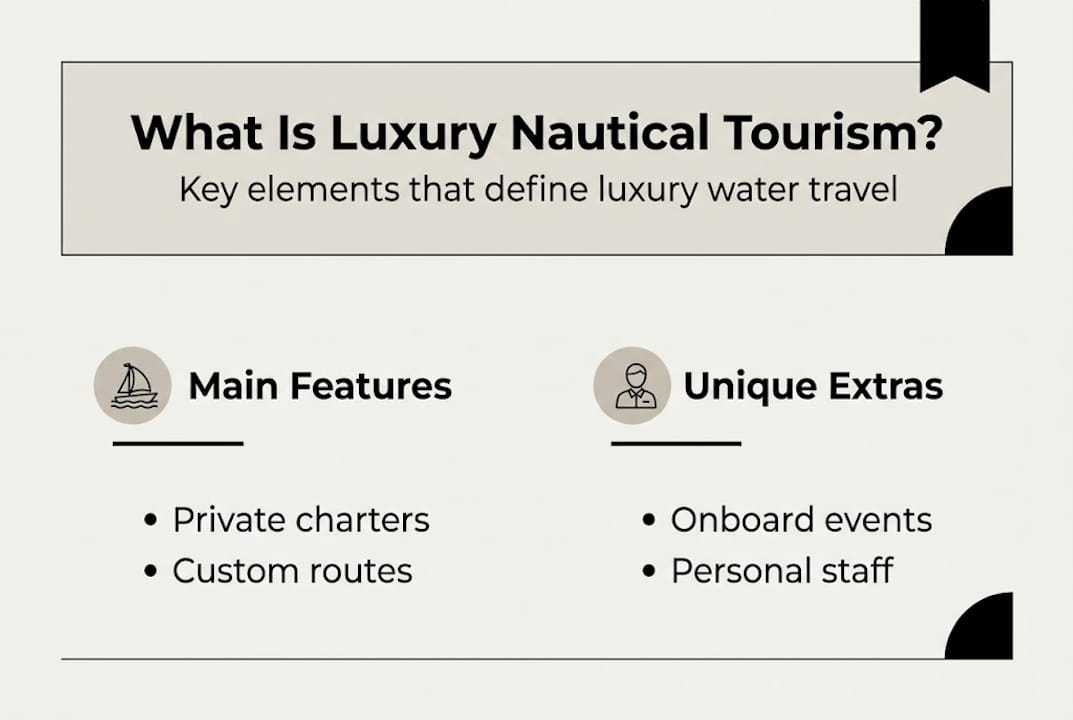
This distinction matters enormously when comparing nautical tourism to conventional cruise holidays. A cruise package places you aboard a floating hotel with thousands of other guests, following a fixed itinerary dictated by the operator. Nautical tourism, particularly at the luxury end, inverts this entirely. You choose the vessel, the route, the pace, and the company. The experience is shaped around you rather than around capacity.
The evolution of the sector reflects a broader shift in how wealthy travellers define value. A decade ago, the aspiration was size: the biggest ship, the most ports, the longest itinerary. Today, the aspiration is intimacy. Travellers and organisers are gravitating towards yacht charters and privacy, where a smaller vessel and a handpicked guest list create something no mega-cruise can replicate.
Key activities within luxury nautical tourism include:
- Private yacht charters along scenic coastlines
- Themed sailing cruises built around gastronomy, art, or wellness
- Scuba diving and snorkelling in protected marine zones
- Marine heritage tours visiting historic ports and underwater sites
- Exclusive onboard events such as corporate retreats, weddings, and private celebrations
The appeal of Mediterranean sailing exclusivity is a perfect illustration of this evolution. The Mediterranean is not short of cruise traffic, but the clients booking private sailing experiences are seeking something the cruise lines cannot offer: silence, flexibility, and a genuine connection to the sea.
“The most meaningful nautical experiences are not measured in nautical miles covered, but in the quality of moments created on the water.”
This is the philosophical foundation on which modern luxury nautical tourism is built, and it is why demand continues to accelerate among discerning travellers worldwide.
Key experiences and offerings in luxury nautical tourism
Understanding its broad scope paves the way for exploring the rich, luxury experiences that define the sector.
Personalisation and exclusivity are the primary drivers of demand for luxury marine offerings, and the range of available experiences reflects this. From a private sunset cruise along the Costa Brava to a multi-day sailing journey with a private chef and dedicated crew, the options are as varied as the clients who seek them.
For event organisers, the possibilities are particularly compelling. A yacht provides a self-contained, captive environment that no hotel ballroom or conference centre can match. Consider the following formats that work exceptionally well at sea:
- Incentive trips rewarding top-performing teams with exclusive sailing experiences
- Executive offsite meetings held in a distraction-free, inspiring marine setting
- Private celebrations such as milestone birthdays, anniversaries, or engagement parties
- Product launches staged against a dramatic coastal backdrop
- Corporate networking events where the shared experience accelerates relationship-building
To help you compare the two main formats available, here is a practical overview:
| Feature | Private yacht charter | Mass cruise |
|—|—|—|
| Guest capacity | 8 to 40 guests | Hundreds to thousands |
| Itinerary flexibility | Fully customisable | Fixed schedule |
| Privacy level | Complete | Minimal |
| Catering | Tailored menus | Standardised buffets |
| Event hosting | Seamless, bespoke | Limited and generic |
| Atmosphere | Intimate, exclusive | Crowded, impersonal |
For those exploring yacht experience ideas for the first time, the breadth of options can feel overwhelming. High-end providers simplify this by working with clients to map out preferences before a single booking is made. Destination, duration, group size, dietary requirements, and entertainment preferences are all factored in from the outset.

When reviewing types of yacht tours, it becomes clear that the most memorable experiences share one trait: they are built around the guest, not the vessel. For corporate yacht events, this means aligning the experience with the company’s culture and objectives rather than simply hiring a boat.
Pro Tip: When evaluating luxury nautical providers, ask specifically how they personalise the experience beyond the vessel itself. The quality of the crew, the sourcing of the catering, and the flexibility of the itinerary reveal far more about a provider’s calibre than the size of their fleet.
Sustainability in nautical tourism: challenges and solutions
Beyond experiences, the demand for luxury is prompting serious environmental innovation and responsibility.
Nautical tourism’s growth brings real environmental pressures. The Mediterranean, one of the world’s most visited sailing destinations, faces particular strain. Over-tourism in key ports, waste discharged into coastal waters, anchor damage to seagrass meadows, and noise pollution affecting marine life are all documented consequences of poorly managed nautical activity. Sustainable practices are essential to reduce these environmental risks from nautical tourism.
The good news is that the industry is responding with genuine innovation. Here is how responsible operators and marinas are addressing the challenge:
| Practice | Private yachting | Mass cruise lines |
|---|---|---|
| Waste management | Onboard recycling, shore disposal | Variable, often inadequate |
| Emissions per guest | Lower with small groups | Higher overall output |
| Anchor management | Mooring buoys, no-anchor zones | Limited compliance |
| Fuel technology | Hybrid and solar options emerging | Slow to adopt |
| Port impact | Minimal footprint | Significant infrastructure pressure |
AIS vessel tracking technology is now widely used to monitor yacht movements in sensitive marine areas, helping port authorities manage traffic and protect biodiversity. Eco-certified marinas are becoming a standard expectation among luxury clients rather than a niche preference.
“Luxury yachts have lower emissions potential than mass cruises, but require vigilant policy and innovation to realise this advantage.”
This is a critical nuance. A private yacht carrying twelve guests is not inherently sustainable simply because it is small. The fuel type, the route, the waste management protocols, and the provider’s broader environmental commitments all matter. Clients using our luxury Mediterranean guide are increasingly asking these questions before booking, which is a positive and powerful shift.
Pro Tip: When selecting a nautical provider, ask whether their marina holds an eco-certification such as the Blue Flag standard, and request details on their waste disposal and fuel practices. Responsible luxury is not a compromise; it is the new benchmark.
Planning a luxury nautical journey or event
With sustainability top of mind, here is how you can plan a truly memorable and responsible luxury nautical experience.
Planning a high-end nautical experience requires more rigour than booking a hotel stay, but the process is straightforward when broken into clear stages. Modern port planning tools, including ANP-TOPSIS and AIS systems, now aid safe, efficient, and exclusive event planning in ports, ensuring that even the logistical elements of your journey are managed with precision.
Follow these steps to plan effectively:
- Define your objective. Are you planning a private holiday, a corporate event, or a celebration? Clarity here shapes every subsequent decision.
- Choose your destination. Consider seasonality, port facilities, and the type of coastline you want to experience.
- Select the right vessel. Match the yacht’s size, style, and amenities to your group’s needs and expectations.
- Verify sustainability credentials. Ask for documentation on fuel practices, waste management, and any eco-certifications held.
- Customise the programme. Work with the provider to build an itinerary that reflects your group’s interests, from gastronomy to water sports.
- Confirm logistics. Transfers, catering, entertainment, and safety briefings should all be confirmed in writing before departure.
Common event formats that work exceptionally well on the water include:
- Incentive travel programmes for corporate teams
- Private milestone celebrations with bespoke catering
- Executive strategy sessions in a distraction-free setting
- Wellness retreats combining sailing with yoga or mindfulness
For those hosting events on yachts for the first time, the key is to engage a provider who treats the planning process as a collaboration rather than a transaction. For executive retreats at sea, the setting itself does much of the work; your role is to ensure the provider can match that setting with equally exceptional service.
Pro Tip: Always ask your provider for a sample itinerary from a comparable past event. This reveals not only their creativity but also their operational competence and attention to detail.
Why the future of nautical tourism lies in tailored, conscious luxury
The conventional wisdom in luxury travel has long equated scale with prestige. Bigger yachts, longer voyages, more ports of call. We believe this thinking is increasingly outdated, and the data supports it.
The clients driving growth in nautical tourism are not chasing volume. They are chasing meaning. They want fewer guests, more freedom, and experiences that feel genuinely crafted rather than packaged. The true luxury edge in sailing is not found in square footage or horsepower; it is found in the quality of a sunset shared with eight people who matter, on a vessel that goes exactly where you want it to go.
Sustainability is not a constraint on this vision; it is central to it. Clients who care deeply about the quality of their experience tend to care equally about the quality of the environment they are experiencing. These values are not in tension. They are the same value expressed differently.
Our prediction is straightforward: the nautical tourism operators who thrive over the next decade will be those who master the intersection of personalisation, environmental responsibility, and genuine human connection at sea.
Explore the world of luxury nautical tourism with exclusive experiences
If this guide has sparked your interest in experiencing nautical tourism at its finest, the next step is closer than you think. The luxury sailing benefits of a well-crafted voyage extend far beyond the journey itself, touching on wellbeing, connection, and the kind of memories that last long after you return to shore.
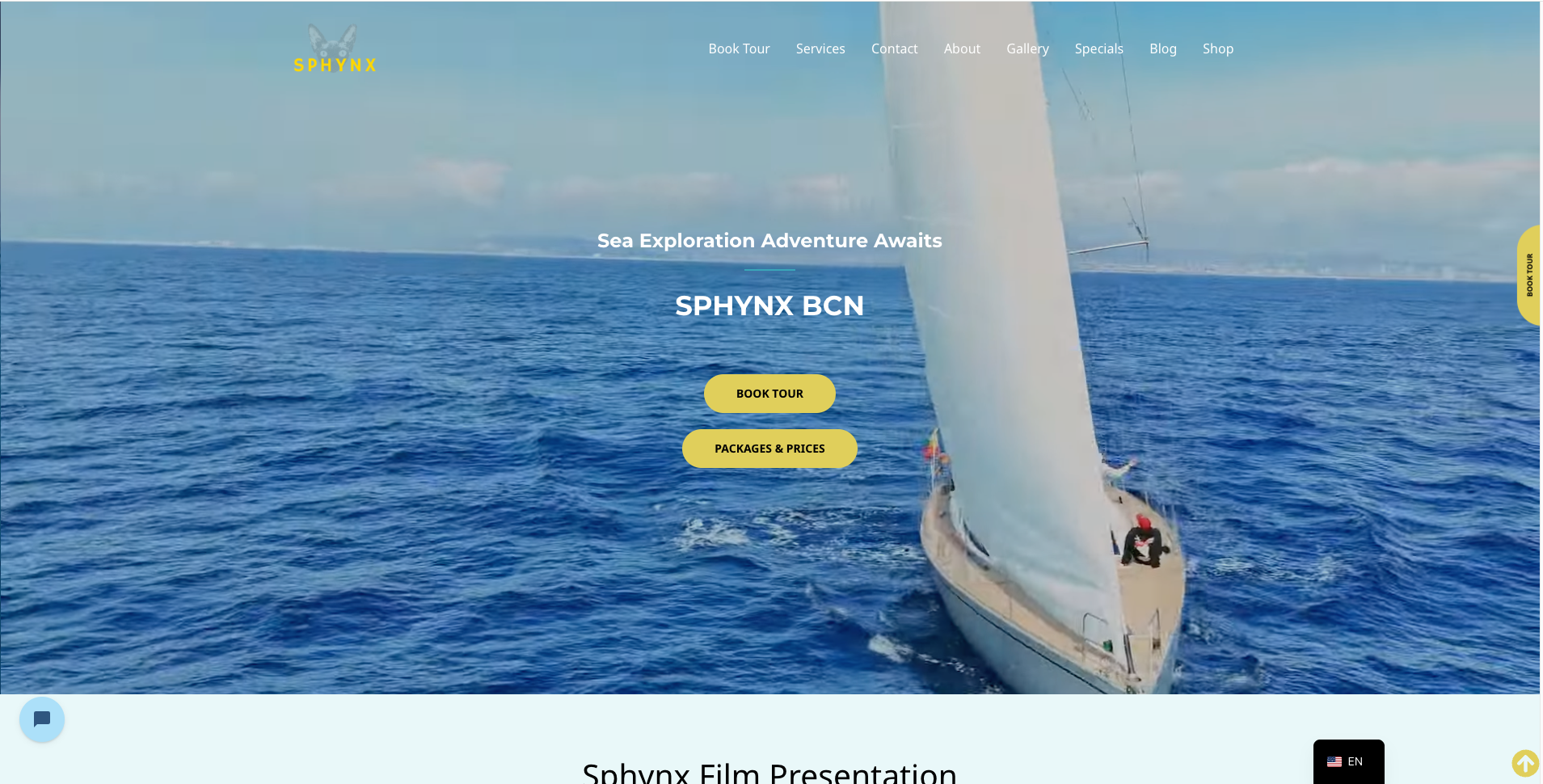
At Sphynx BCN, we specialise in creating precisely these kinds of experiences along the Barcelona coastline and beyond. Whether you are exploring our corporate yacht events guide or simply ready to book a private sailing experience, our team is here to help you design something extraordinary. Visit SphynxBCN Luxury Tours to begin planning your journey today.
Frequently asked questions
How is nautical tourism different from cruise tourism?
Nautical tourism offers private, personalised experiences such as yacht charters and water sports, while cruise tourism is mass-market and follows fixed, operator-controlled itineraries with little room for customisation.
What are the most popular activities in luxury nautical tourism?
Yachting, themed cruises, diving, sunset tours, and exclusive onboard events are the top drivers of luxury marine travel, with private celebrations and corporate events growing rapidly in demand.
How sustainable is the nautical tourism sector?
With new eco-certifications and policy innovation, private yachting is becoming more sustainable than large cruise operations, though ongoing vigilance from both providers and clients remains essential.
What should I consider when booking a luxury nautical experience?
Prioritise the provider’s sustainability standards and customisation capabilities, alongside safety credentials and the quality of their crew, to ensure an experience that is both exceptional and responsibly delivered.