
TL;DR:
- Guest management and personalized service drive 90% of repeat bookings in luxury yachting.
- Effective preference sheets capture detailed guest needs for tailor-made onboard experiences.
- Trained, attentive crew delivering anticipatory service create memorable, loyalty-inspiring charters.
Charter rebooking data shows that guest management drives 90% of return bookings, with crew excellence and personalised service ranking above yacht features every time. That tells you something important: the vessel is merely the stage. When affluent travellers book a luxury charter in Barcelona, they are not paying for fibreglass and horsepower. They are paying for how the entire experience makes them feel, from the moment they step aboard to the second they reluctantly disembark. Mastering yacht hospitality requires meticulous planning, anticipatory service, and a crew that understands the artistry of discretion combined with warmth. Here is exactly how the finest charters deliver it.
Tabla de Contenidos
- Pinpointing guest preferences: The foundation of luxury service
- Anticipatory personalisation: Going beyond expectations
- Crew training and standards: The backbone of guest satisfaction
- Creating memorable onboard experiences: Details that matter most
- A new era in yacht hospitality: Why experience always wins
- Experience luxury hospitality on Barcelona’s top yachts
- Frequently asked questions
Key Takeaways
| Point | Details |
|---|---|
| Start with guest preferences | Detailed preference collection weeks in advance enables bespoke hospitality and avoids costly mistakes. |
| Invest in anticipatory service | The finest charters delight guests before they ask, using smart data and crew intuition. |
| Prioritise crew training | Meticulous crew onboarding and continuous education underpin every successful luxury experience. |
| Perfect the details | Memorable charters depend on creative, personal touches and flawless delivery in every aspect. |
Pinpointing guest preferences: The foundation of luxury service
World-class charters begin weeks before anyone steps on deck. The instrument that separates the truly exceptional from the merely good is the guest preference sheet, a structured document collecting every piece of information a crew needs to personalise the charter with precision. Without it, even the most experienced crew is guessing. With it, they can orchestrate an experience that feels almost telepathic.
A thorough preference sheet must cover far more than food allergies. According to best-practice charter management, a preference sheet sent four to six weeks before departure captures dietary restrictions at medical-grade detail, activity preferences, the daily schedule, special occasions, medical information, and cabin assignments. This timing is not arbitrary. Provisioning premium produce, sourcing rare spirits, commissioning custom floral arrangements, and booking specialist vendors all require lead time that simply cannot be compressed to the last week before departure.
Consider what “dietary restrictions” means at this level. It is not merely “vegetarian” or “no nuts.” It encompasses intolerances, religious observances, caloric preferences for athletic guests, specific cuisine dislikes from childhood, and textures that trigger aversive responses. Medical-grade detail means your chef knows whether a guest’s allergy is a preference or a genuine anaphylactic risk. The stakes are high, and a lapse here is never forgotten.
Here is a structured approach to gathering guest data effectively:
- Send the preference sheet at least five weeks out, not two or three. This gives the provisioning team time to source ingredients, the chef time to develop bespoke menus, and the captain time to plan itinerary adjustments around preferred activities.
- Segment the sheet by guest type when handling multigenerational groups. A grandmother celebrating her 80th birthday has entirely different preferences from her teenage grandchildren. Treating the group as a single entity produces a mediocre experience for everyone.
- Collect milestone information explicitly. Ask directly: “Are there any anniversaries, birthdays, or significant events during this charter?” Guests often omit these details, assuming the crew will not go to the trouble. Surprise them.
- Request preferred sleep schedules. Whether guests are early risers who want a freshly laid breakfast at 7am or late-night entertainers expecting cocktails at midnight, the crew must be aligned to their rhythm, not the other way around.
- Record activity intensity preferences. Some guests want paddleboarding and jet ski excursions. Others prefer floating with a book. Knowing in advance prevents misaligned suggestions that make guests feel misunderstood.
“The preference sheet is not a form to be filled in and filed. It is the creative brief for the entire charter. Every detail within it becomes an opportunity to surpass expectation.” This is the mindset that separates average crews from legendary ones.
Understanding yacht etiquette essentials alongside preference gathering ensures the entire experience feels culturally attuned to the guest’s background. Certain guests expect formal service protocols; others prefer an informal, relaxed atmosphere. Failing to read that distinction early can make even the most generous hospitality feel misaligned.
Pro Tip: For guests with unique interests such as marine biology, contemporary art, or competitive sailing, build a short “passion point” into the preference sheet. The crew can then arrange a local expert, a relevant anchorage, or a curated reading selection on board. These small gestures produce outsized emotional impact. Exploring personalised yacht experiences y wellness options onboard can give your planning team a broader toolkit of ideas to draw from.
Anticipatory personalisation: Going beyond expectations
Once guest preferences are captured, the next step is using that information to exceed even unspoken expectations. This is where the difference between good service and legendary service becomes visible. Anticipatory personalisation means the guest’s preferred drink appears before they ask. The playlist shifts subtly to match the mood of the sunset. The cushions are rearranged to their favoured configuration before they settle on the aft deck.
The most progressive charter operators now use centralised digital guest profiles, securely maintained across multiple charters. This allows a returning guest to feel recognised and remembered without having to repeat their preferences. Anticipatory personalisation relies on centralised data and real-time capture, so the crew can act on preferences before they are voiced. The operational mechanics include shared crew briefing documents, pre-departure meetings where the entire team reviews each guest’s profile, and live communication tools so a deckhand can alert the interior team about a guest’s activity change in real time.
Technology is accelerating this capability. AI-driven CRM platforms (customer relationship management tools) designed for superyacht operations can flag preference patterns, suggest menu pairings based on dietary history, and even remind the crew of upcoming guest milestones mid-charter. The result is a service layer that feels human but is backed by data precision.
Key personalisation strategies that consistently elevate the guest experience:
- Maintain a living guest profile, updated after every charter with new preferences, feedback notes, and behavioural observations.
- Brief every crew member, not just the chief stewardess. A deckhand who knows a guest dislikes strong fragrances can prevent a sunscreen mishap. Awareness at every level matters.
- Design parallel programmes for multigenerational groups. Children need structured activities and age-appropriate entertainment while adults enjoy their own pace. Running these simultaneously, without either group feeling neglected, requires careful coordination.
- Capture real-time feedback signals. If a guest leaves food untouched, that is information. If they linger at a particular anchorage longer than planned, that is a preference for future itinerary design.
- Create micro-moments of recognition. A handwritten note acknowledging an anniversary. A favourite childhood snack sourced from a local market. These are the details guests describe to friends for years afterwards.
“The charters guests remember are not the ones with the largest superyachts. They are the ones where someone clearly noticed them.”
Pro Tip: After every charter, spend thirty minutes updating the guest profile with candid notes. What surprised them positively? What fell flat? These records become invaluable when they return or refer colleagues. Exploring top Mediterranean yacht experiences can spark ideas for upgrading your personalisation toolkit, and integrating wellness activities into guest profiles adds another layer of tailored care.
Crew training and standards: The backbone of guest satisfaction
Even the most personalised offerings can fail without a highly trained crew maintaining strict standards throughout the charter. Crew excellence is not instinctive; it is built through rigorous, structured training and reinforced through consistent performance management.
In Barcelona, mandatory crew certifications include STCW Basic Safety refreshed every five years and ENG1 medical clearance every two years, with specialist interior training in hospitality, silver service, and leadership available through local institutions including MB92, Pronautic, and ILTY. These programmes ensure that every crew member operates to an internationally recognised safety baseline, while local training sharpens the soft skills that translate into guest delight.
Performance metrics are equally critical and must be clearly communicated during onboarding. Research shows that 80% of stewardess onboarding failures result from unclear service expectations in the first thirty days. The benchmarks that matter most at the luxury tier are as follows:
| Metric | Luxury standard |
|---|---|
| Cabin turnover time | 45 to 60 minutes |
| Guest request response | Under 10 minutes |
| Guest satisfaction score | Above 95% |
| Inventory accuracy | Above 98% |
| Pre-departure briefing completion | 100% before every charter |
Common onboarding failures occur when new crew members receive the vessel manual but not the service philosophy. Technical knowledge without cultural understanding produces robotic hospitality. The best crews operate with genuine warmth, reading the room and adapting their energy to match the guests’ mood at any given moment.
To build this standard consistently:
- Set written service expectations on day one, not after the first complaint arrives.
- Conduct daily briefings covering that day’s guest schedule, mood observations from the previous day, and any preference updates.
- Run service rehearsals for key moments such as formal dinners, embarkation, and disembarkation sequences so every crew member knows their role without prompting.
- Evaluate crew performance after each charter using both self-assessment and captain feedback, specifically referencing the measurable metrics above.
Industry referencing confirms that yacht service standards are evolving rapidly, with guests now benchmarking their charter experience against the finest boutique hotels globally. Crews who carry this awareness perform measurably better.
Creating memorable onboard experiences: Details that matter most
With world-class service and crew in place, the ultimate difference is made by unforgettable moments, down to the smallest detail. The architecture of a memorable charter relies on signature experiences designed around each guest group’s character.
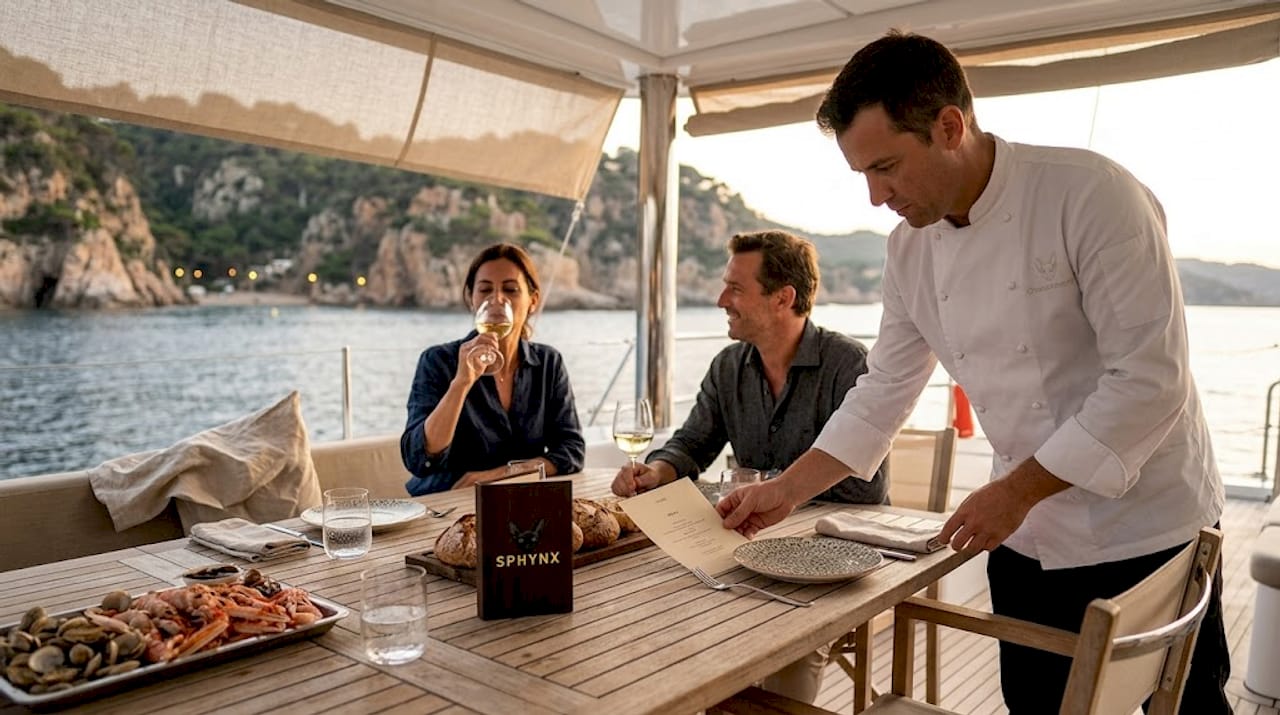
Signature dining is the most powerful canvas. A sunset dinner at anchor off the Costa Brava, with a menu developed around the guests’ favourite regional cuisine and served on handpicked crockery, creates a sensory memory that no hotel restaurant can replicate. The key variables are menu personalisation, timing relative to the natural light, and setting transformation. Transforming a standard aft deck into an intimate dining environment with carefully considered table styling takes under an hour and changes the guest’s entire perception of the evening.
| Experience type | Optimal elements | Primary guest group |
|---|---|---|
| Private celebration | Custom décor, milestone cake, champagne sequence | Couples, families |
| Corporate charter | Catered working sessions, team building at sea, formal dining | Business groups |
| Leisure sailing | Flexible itinerary, watersports, casual grazing menus | Friends, adventurers |
| Wellness retreat | Dawn yoga, spa treatments, clean nutritional menus | Solo travellers, couples |
To build experiences that guests cannot replicate elsewhere, follow this sequence:
- Anchor the experience to a specific sensory memory. The scent of a particular flower arrangement, a signature cocktail served only on this vessel, or a custom playlist create emotional anchors that recall the experience vividly years later.
- Use crew insider knowledge. Local crew members know the best anchorages for privacy, the markets that open at dawn for the freshest produce, and the coastal spots where bioluminescence appears at night. These discoveries, offered as gifts rather than itinerary items, become the stories guests tell.
- Layer the wellness offering. Beyond watersports, consider partnering with specialist instructors for dawn yoga on the foredeck, in-water meditation sessions, or massage therapists who board at a marina stop. These additions signal attentiveness to holistic wellbeing.
- Close the charter deliberately. The final meal, the farewell gift, the disembarkation sequence: these are not afterthoughts. Charter rebooking data shows that guest management drives 90% of return bookings, and the last impression carries disproportionate emotional weight.
Pro Tip: Ask the chef to prepare a small printed menu card for every formal meal. This single gesture elevates a dinner into an event, gives guests a keepsake, and reinforces the impression of an operation that considers every detail. Discovering luxury catering options and unique onboard experiences can give your planning team a wider range of creative tools.
A new era in yacht hospitality: Why experience always wins
After years of watching the luxury charter market evolve, the most revealing pattern is this: guests never ring back to rebook because the yacht had a larger swim platform or a more impressive galley. They ring back because someone on that crew made them feel genuinely seen.
The uncomfortable truth in high-end yachting is that reactive service, however polished, is a silent failure. A guest who has to ask for something is already slightly disappointed. The crews who inspire loyalty are the ones reading the room hours in advance, acting on information gathered weeks before departure, and caring enough to remember that the primary guest takes her coffee without milk but with a square of dark chocolate on the saucer.
Technology will continue to support this ambition, but the future belongs to crews with both data literacy and emotional intelligence. The corporate hospitality insights we see emerging from the corporate charter sector confirm that even business clients, focused on productivity, are profoundly affected by the quality of human connection onboard. A mindset shift from “service provider” to “experience architect” is what separates the charters guests forget from the ones they describe with visible joy at dinner parties two years later.
Experience luxury hospitality on Barcelona’s top yachts
Everything covered here, from meticulous preference gathering to anticipatory crew service and bespoke onboard experiences, is the standard Sphynx BCN builds every charter around.
Whether you are planning an intimate private celebration, a high-impact corporate event, or an unhurried sailing journey along the Mediterranean coast, our professional crew applies these exact best practices to every booking. Browse the full range of luxury yacht charter options to find the format that fits your group perfectly, and explore Barcelona sailing tours for curated experiences designed around your preferences. Your unforgettable charter begins long before you board.
Frequently asked questions
What is a yacht preference sheet and why is timing important?
A yacht preference sheet captures dietary, medical, and activity requirements at a detailed level, and sending it four to six weeks out allows sufficient time for bespoke provisioning, menu development, and itinerary adjustments that a last-minute submission cannot accommodate.
How are luxury yacht crews trained for hospitality in Barcelona?
Crews complete mandatory STCW safety training refreshed every five years and ENG1 medical certification every two years, with specialist interior training in hospitality, silver service, and leadership delivered through Barcelona institutions including MB92, Pronautic, and ILTY.
What differentiates a truly personalised luxury charter experience?
Genuine personalisation means knowing preferences before guests voice them, using centralised profiles and real-time crew communication to deliver seamless, anticipatory service that makes every guest feel uniquely understood.
What key crew performance metrics impact guest satisfaction?
The critical luxury benchmarks are a request response time under ten minutes, cabin turnover in 45 to 60 minutes, inventory accuracy above 98%, and a guest satisfaction score consistently above 95%, all of which must be communicated clearly from the first day of onboarding.