

TL;DR:
- Effective sailing trip planning requires thorough boat systems checks and flexible daily routes based on accurate weather forecasts.
- Balancing anchoring, provisioning, and shore activities, along with anticipatory logistics, ensures a smooth, enjoyable voyage and memorable experiences.
Planning a sailing trip that genuinely works takes more than picking a destination on a map. Between weather windows, anchorage availability, daily distances, and keeping your crew happy, a poorly structured plan can turn a dream voyage into a stressful scramble. This sailing itinerary creation guide walks you through every stage of the process, from pre-departure checks to enriching your stops with memorable shore experiences. Whether you are chartering bareboat for the first time or refining a repeat route, the step-by-step approach here will give you the confidence to plan smart and sail well.
Table of Contents
- Key takeaways
- Getting prepared before you create a sailing itinerary
- Step by step sailing itinerary creation
- Weather, tides, and safety checks
- Moorings, provisioning, and onboard logistics
- Shore activities and guest experience planning
- My honest take on planning versus spontaneity
- Sail with Sphynxbcn in the Mediterranean
- FAQ
Key takeaways
| Point | Details |
|---|---|
| Prepare before you plan | Complete boat systems checks and gather forecast tools before drafting a single day of your itinerary. |
| Build flexibility into every day | Include alternative anchorages and adjust daily distances based on real weather, not wishful thinking. |
| Use multiple weather sources | Cross-referencing apps, VHF broadcasts, and local forecasts reduces the risk of being caught off guard. |
| Book moorings early | Marinas in popular destinations fill fast; advance reservations protect your itinerary from unravelling. |
| Enrich stops deliberately | Shore activities planned around your crew’s interests transform a sailing schedule into a genuine experience. |
Getting prepared before you create a sailing itinerary
The biggest mistake first-time planners make is opening a chart before they have confirmed their boat is ready. Your itinerary is only as reliable as the vessel and kit behind it.
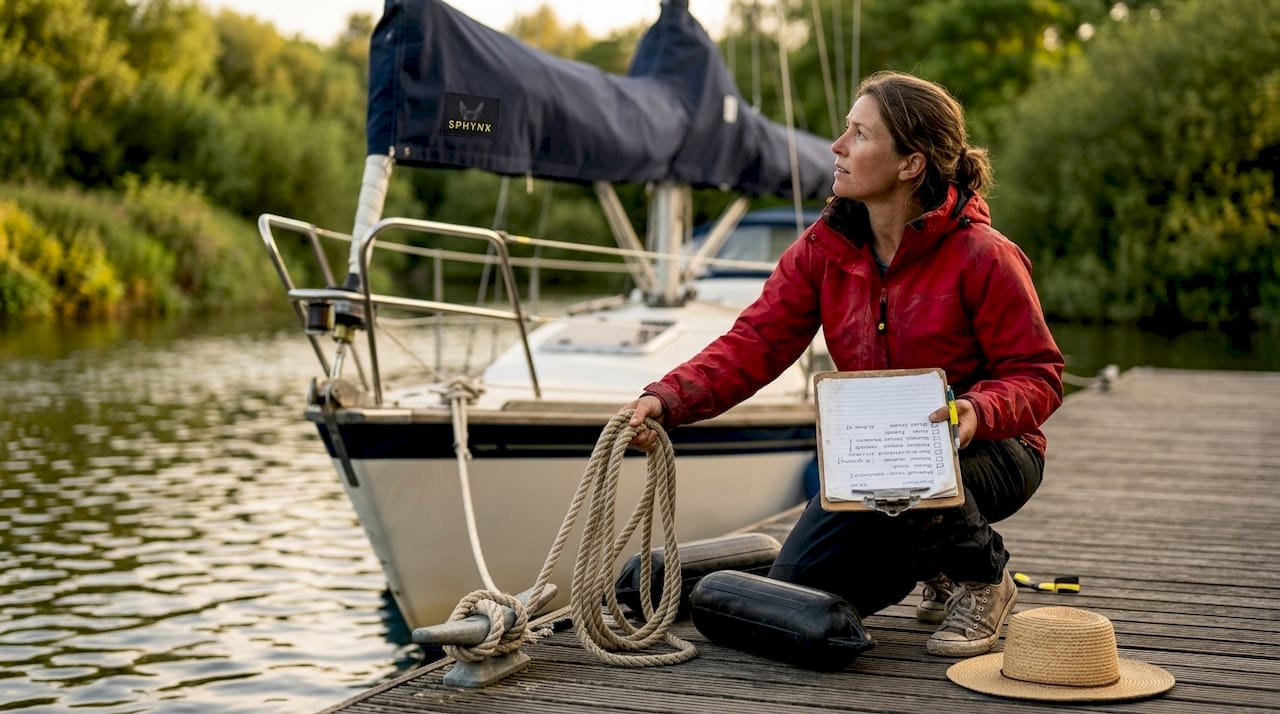
Start with a thorough pre-departure walkthrough. A 30-minute system check before departure should cover the windlass, anchor and ground tackle, navigation electronics, and VHF radio on channel 16. Paper charts deserve a place in your kit even in 2026. Electronics fail; paper does not.
Here is what to gather and confirm before sitting down to plan:
- Navigation tools: Up-to-date charts (paper and electronic), a working chartplotter, and a compass
- Communication equipment: VHF radio tested and operational, flares in date, and an EPIRB registered
- Safety systems: Life jackets, harnesses, bilge pump, fire extinguishers, and a first-aid kit all checked
- Propulsion and fuel: Engine service current, fuel tank full, and spare engine oil aboard
- Forecast tools: Accounts set up on at least two weather apps (PredictWind and Windy are reliable choices)
Skills and qualifications matter too. Bareboat charterers are fully responsible for navigation and safety, which means holding or crewing alongside someone with the appropriate licence. Understanding your anchoring system, electrics, and onboard navigation before you set off is what reduces stress at sea and makes realistic itinerary planning possible. If you are chartering through a company, attend the technical briefing with full attention rather than treating it as a formality.
Pro Tip: Before finalising your route, use Google Earth in satellite mode to preview anchorages and identify crowded bays. It takes ten minutes and saves you arriving somewhere unsuitable after a full day’s sail.
Step by step sailing itinerary creation
Once your boat and gear are confirmed, the planning itself can begin. The goal at this stage is a day-by-day framework that is realistic, flexible, and genuinely exciting for everyone aboard.
Define your start point, end point, and total days
Before anything else, write down where you are departing from, where you need to return (or finish), and how many full sailing days you have. A loop itinerary, where you return to the same marina, suits most charter groups because it removes the complication of one-way logistics.
A well-structured 7-day loop itinerary assigns realistic daily distances, typically 20 to 35 nautical miles per day, with shorter days built in for exploration and rest. Day one is often intentionally brief to allow the crew to settle into the boat and routines.
Plan day-by-day distances and stops
Use the following numbered approach to build out your days:
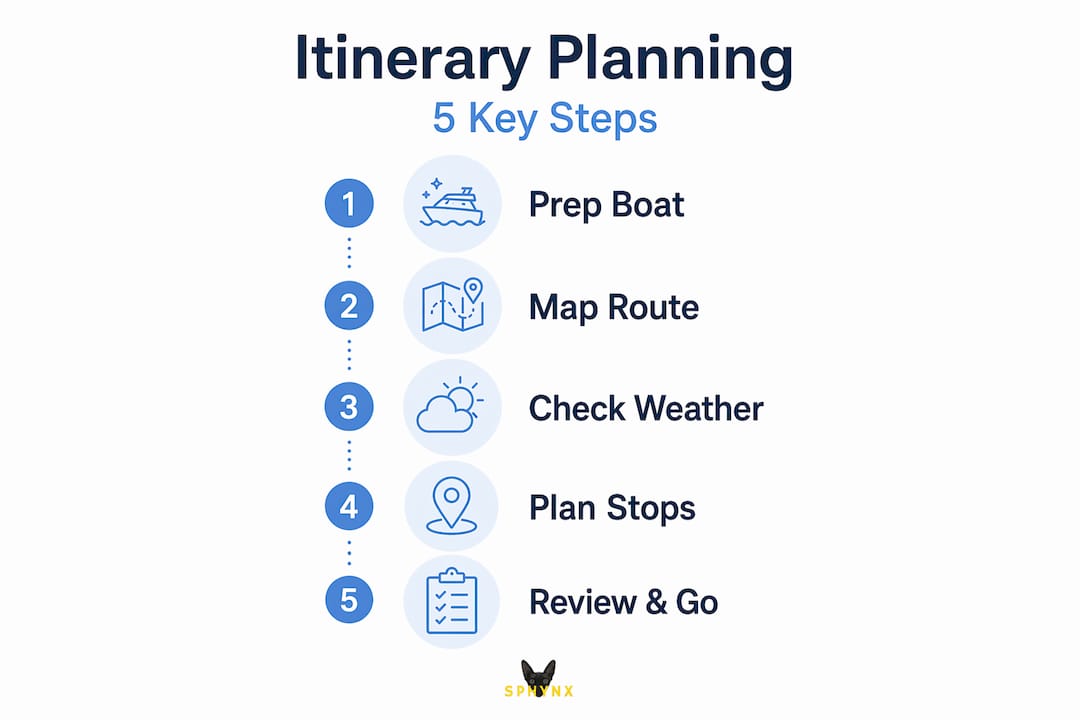
- Plot your primary stops on the chart, one per day, selecting anchorages or marinas within comfortable range.
- Calculate sailing time using your expected average speed (usually 5 to 7 knots for a cruising yacht) and factor in departure time and arrival before dark.
- Assign one alternative anchorage per day in case conditions or timing change.
- Mark provisioning stops on the route so you are never more than two days from a resupply point.
- Schedule at least one full rest day mid-trip where you stay put, swim, and explore without pressure.
- Add shore activities to each stop where relevant, but keep them optional rather than fixed commitments.
- Review the whole sequence for logical flow, checking you are not constantly sailing into prevailing winds.
Balancing sail time with time ashore
Flexible itinerary planning means keeping a list of appealing destinations and then assembling the precise day-by-day sequence during the trip based on conditions and crew mood. That is not poor planning. That is professional planning. The skeleton is firm; the flesh adapts.
A useful comparison when deciding whether to anchor or book a marina berth:
| Factor | Anchorage | Marina berth |
|---|---|---|
| Cost | Free or very low | Moderate to high |
| Privacy and quiet | High | Low to moderate |
| Shore access | Dinghy required | Walk off the boat |
| Facilities | None | Showers, restaurants, power |
| Booking needed | No | Yes, ideally in advance |
Pro Tip: Plan your most ambitious sailing days for the middle of the trip, not the start or end. Crew competence and confidence grow after two or three days aboard, and your last day before return is often logistically tight.
Weather, tides, and safety checks
Weather is the variable that overrules every other element of your itinerary. Treating it with respect is not timidity. It is seamanship.
The single biggest error sailors make is trusting one forecast platform exclusively. Disagreement between forecast models is a direct warning sign. When PredictWind and Windy show different wind strengths for the same window, that uncertainty is real. Treat it as such and consider a conservative option.
Build a daily weather routine into your sailing tour schedule:
- Check two forecast apps each morning before departure, comparing wind speed, direction, and swell
- Listen to scheduled VHF weather bulletins, which are broadcast on set channels in most cruising regions
- Reassess your planned stop by mid-morning, especially if conditions are developing faster than forecast
- Identify a bail-out anchorage within two hours of your position at all times
“Daily weather reassessment and a willingness to take an unscheduled anchor night are professional best practices, not a sign of poor planning.” — boattomorrow.com
Anchoring safely overnight is its own skill and one that protects your itinerary from costly disruptions. A 5:1 chain scope ratio is the standard recommendation, meaning 30 metres of chain in 6 metres of water. Set the anchor by throttling in reverse and holding for 10 to 15 seconds, then monitor chain vibrations. Set your chartplotter anchor alarm before you sleep. This small step means you will not wake to find the boat has dragged silently into a lee shore.
Moorings, provisioning, and onboard logistics
The logistical side of itinerary planning for sailing is often underestimated, particularly by those chartering for the first time. Getting this right means the sailing days feel effortless rather than stressful.
Key logistical steps to work through:
- Book marinas in advance for any popular destinations, particularly during peak summer months. Popular ports in the Mediterranean, Greek islands, and Croatian coast fill within days of being available.
- Provision inland rather than at the marina. Local markets inland offer better quality and far lower prices than marina supermarkets. Walk ten minutes and you will eat better for less.
- Monitor battery and fuel levels daily, not when you think you might need to. Anchor charging is less reliable than marina shore power, so plan accordingly.
- Stow provisions logically so that items needed underway are accessible without opening every locker in a seaway.
Pro Tip: When planning provisioning stops, check the day of the week. Many small-town markets in Mediterranean sailing destinations are weekly affairs. A Thursday arrival to a village with a Saturday market is far more useful than a Sunday arrival.
For the best sailing routes in the Mediterranean, looking at yacht route guides before finalising your itinerary will save you considerable research time and uncover stops you would not otherwise have found.
Shore activities and guest experience planning
The stops on your itinerary are not just logistical punctuation. They are where most of the memories are made. A good sailing destinations guide always covers what to do once you arrive, not just how to get there.
A few principles that work consistently well:
- Know your crew before you plan the stops. Foodies want the market towns and waterfront restaurants. Active crews want the sea kayaking, cliff walks, and snorkelling bays. Tailor accordingly.
- Build in one special experience per trip, not one per day. A cooking class ashore, a wine tasting in a hillside village, or a sunset dinner at a celebrated local restaurant creates a centrepiece that anchors the whole trip in memory.
- Leave time unscheduled. The best moments on sailing trips are often the ones that were not planned: a spontaneous swim off a deserted headland, a conversation with a local fisherman, or staying an extra night because the bay is simply too beautiful to leave.
- For luxury charters, integrating thoughtful hospitality aboard complements the stops ashore. Resources on luxury yacht hospitality go into detail on how to manage the onboard experience between ports.
- Research shore excursion logistics before departure, including taxi availability, tender landing spots, and opening hours of attractions. A brilliant restaurant is useless if it closes at 14:00 and you arrive at 15:00.
For groups planning activities along the Barcelona coast, the yacht excursion preparation guide is worth reading before finalising your plans.
My honest take on planning versus spontaneity
I have spoken to a great many sailors over the years, and the ones who enjoy their trips most are never the ones with the tightest itineraries. The sailors who plan obsessively and then refuse to deviate are also, almost always, the most stressed people on the water.
In my experience, the purpose of a detailed itinerary is not to follow it. It is to give you the confidence and context to depart from it intelligently. When you know your distances, your alternatives, and your weather tools, a change of plan stops being a failure and starts being a decision.
I have seen trips that were genuinely improved by a three-day storm that pinned a crew in a tiny harbour. They explored on foot, ate in local restaurants, learned the names of the bar staff, and left with a richer experience than their original route would have delivered.
The practical advice I would give anyone creating their first sailing tour schedule: plan the framework with real rigour, then hold the details loosely. Prepare for the worst conditions; you will likely not need those preparations. But carry them anyway. The crews who sail most comfortably are the ones who planned for more than they needed.
— YellowRock
Sail with Sphynxbcn in the Mediterranean
Everything in this guide, the route planning, the weather monitoring, the logistical coordination, is handled for you when you sail with Sphynxbcn. Based in Barcelona, Sphynxbcn specialises in private and luxury shared sailing experiences along one of the world’s most celebrated coastlines.
Whether you are after a curated private charter or a fully guided yacht experience with the route already built to perfection, the team at Sphynxbcn brings the expertise so you can focus entirely on enjoying the sea. From intimate sunset cruises to multi-day luxury charter options in Barcelona, every experience is designed around your group, your pace, and your preferences. Browse the full range of exceptional yacht experiences and find the one that suits you.
FAQ
How many nautical miles should I plan per sailing day?
Most cruising yachts cover 20 to 35 nautical miles comfortably in a day, allowing time to arrive, anchor, and explore before dark. Shorter days of 10 to 15 miles suit new crews or heavy tourist areas with slower navigation.
How far in advance should I book marinas?
During peak summer season in popular Mediterranean destinations, booking marina berths two to four weeks ahead is recommended. Some well-known ports in Croatia and the Balearics fill within days of the booking window opening.
Do I need paper charts if I have a chartplotter?
Yes. A pre-departure checklist consistently includes paper charts as a backup because electronic systems can fail. Carrying paper charts is considered standard seamanship and is required by many charter companies.
How should I handle bad weather on a sailing itinerary?
Using multiple forecast sources daily and building an alternative anchorage into each day’s plan allows you to adjust without losing the trip. A weather window that looks doubtful in the morning often resolves by early afternoon or confirms the need to stay put.
Is anchoring free on sailing itineraries?
Anchoring in open water is generally free in most European cruising regions, though some protected bays and marine parks charge a mooring ball fee. Checking local regulations for each planned stop is part of thorough itinerary planning for sailing.