

TL;DR:
- Dressing for a yacht trip in Barcelona requires quick-drying, breathable fabrics like linen and technical synthetics for comfort and safety. Proper footwear with light, non-marking soles is essential to protect the yacht deck and prevent damage, while sun protection accessories are crucial to avoid sunburn and dehydration. Packing light in a soft bag and layering versatile pieces enable seamless day-to-evening outfits suitable for the Mediterranean environment.
Dressing for a yacht trip in Barcelona means combining smart-casual elegance with practical, sun-safe choices suited to the Mediterranean. The correct approach to Barcelona sailing attire is not about fashion alone. Fabric, footwear, and accessories all carry real consequences for your comfort, safety, and the condition of the vessel. Barcelona’s coast delivers strong sun, sea spray, and shifting evening breezes, which means your yacht trip outfit needs to work across multiple conditions in a single day.
What to wear on a yacht trip in Barcelona: fabrics and styles that work
The best clothing for a Barcelona yacht trip is lightweight, breathable, and quick-drying. Linen, technical cotton blends, and quick-dry synthetics are the three fabric categories that perform best in Mediterranean conditions. Each handles heat and humidity differently, and your choice affects how comfortable you feel after swimming, spray, or a sudden squall.
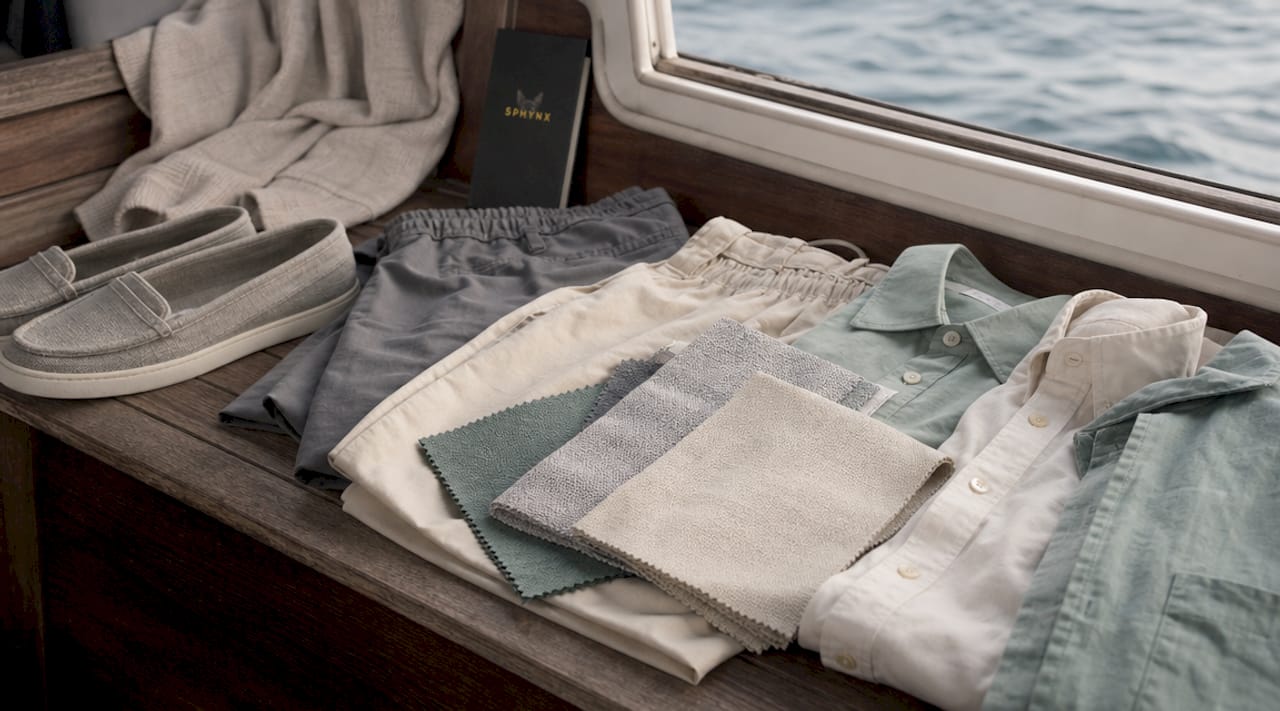
Quick-dry synthetic and merino wool fabrics outperform standard cotton significantly at sea. Where a cotton T-shirt can take eight or more hours to dry in humid conditions, a merino or synthetic equivalent dries in two to three hours. That difference matters when you have one cabin and limited hanging space.
For style, the smart-casual nautical register works best on a luxury charter. Women tend to wear flowy sundresses, linen trousers, or maxi dresses with flat sandals. Men typically choose polo shirts paired with tailored shorts in neutral or navy tones. Both approaches read as polished without being overdressed for an active sailing environment.
Key fabric and style choices to prioritise:
- Linen or linen blends: Breathable, stylish, and appropriate for both deck time and shore stops
- Quick-dry technical shorts or trousers: Practical for active sailing and dry fast after spray or a swim
- Swimwear with a cover-up: A sarong, kaftan, or lightweight shirt transitions you from the water to the deck without a full outfit change
- UPF-rated long-sleeve shirts: Particularly useful for midday sailing when UV index on the water is significantly higher than on land
- Light knit or cotton layer: A thin cardigan or crew-neck sweatshirt handles the temperature drop after sunset
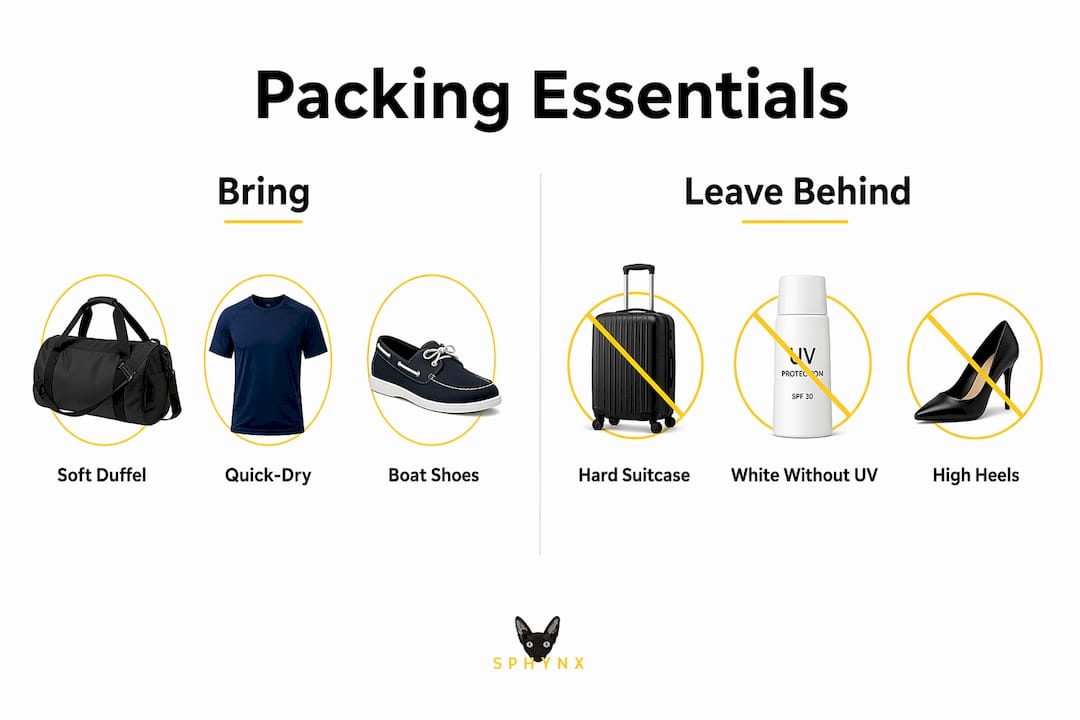
Pro Tip: Avoid packing anything white that is not UV-protective. White cotton becomes transparent when wet and offers almost no sun protection. Opt for UPF-rated white garments or choose light colours in technical fabrics instead.
Layering is the defining principle of yachting fashion, blending nautical ease with dockside elegance. A sundress worn at noon with a wide-brim hat becomes an evening look with a linen blazer thrown over the shoulders. Building your wardrobe around three or four versatile pieces is smarter than packing for every scenario separately.
What footwear is safe and appropriate on a yacht deck?
Footwear is the single most regulated aspect of yacht dress codes, and the rules exist for good reason. High heels are strongly discouraged on any yacht because they puncture teak decks, destabilise your footing on a moving vessel, and create genuine injury risk. The deck surface shifts constantly underway, and a heel catching a deck fitting can cause a serious fall.
The more costly risk comes from sole colour. Dark-soled shoes stain yacht decks and charter companies charge between €1,500 and €3,000 for professional deck cleaning caused by black-soled shoes. That is not a theoretical risk. It is a standard clause in most charter contracts. Every shoe you bring aboard must have white or light non-marking soles.
The best footwear options for a Barcelona yacht trip, in order of practicality:
- Boat shoes (Sperry, Sebago, or equivalent): The standard choice. Non-marking soles, grip on wet surfaces, and a classic nautical look that suits smart-casual dress codes
- Sailing sandals (Keen, Teva, or similar sport sandals): Secure fit, non-marking, and comfortable for active participation in sailing manoeuvres
- Reef shoes or water shoes: Ideal if you plan to swim from the boat or walk on rocky shorelines during shore excursions
- Casual flip-flops: Acceptable for relaxing on deck or stepping ashore briefly, but not suitable for active sailing
Most guests go barefoot once they are settled on deck, and this is entirely acceptable on a well-maintained yacht. Shoes become necessary when moving around the boat underway, boarding or disembarking, or visiting shore stops where surfaces are uneven.
Pro Tip: Check the soles of every pair of shoes before you pack them. Hold the sole against a white piece of paper and press firmly. If it leaves a mark, leave those shoes at the hotel.
What accessories do you need for a Barcelona yacht trip?
Accessories are where most first-time yacht guests underpack, and where the difference between a comfortable day and a miserable one is decided. Sun protection is the first priority. The UV index on open water is measurably higher than on land because the surface reflects radiation back upward. Sunscreen reapplication every 90 minutes is the minimum standard, not a suggestion.
The essential accessories for a Barcelona sailing day, ranked by importance:
- Reef-safe SPF 50+ sunscreen: Reef-safe mineral sunscreens protect marine ecosystems and prevent staining the yacht’s white upholstery, which is why most charter companies actively request them
- Wide-brim hat: A hat with at least an 8 cm brim protects your face, neck, and ears. Secure it with a chin strap or hat retainer for windy conditions
- UV-rated sunglasses with a retainer strap: Polarised lenses reduce glare off the water significantly. The retainer strap prevents losing them overboard
- Reusable water bottle: Bring at least two litres of water per person for a half-day trip. Sun, sea spray, and physical activity cause rapid dehydration that most guests underestimate
- Seasickness remedy: Even short Barcelona coastal trips can encounter choppy water. Antihistamine tablets such as Stugeron, acupressure bands, or prescription patches are all worth packing
- Dry bag: Protects your phone, camera, and documents from spray and splashes. A 10-litre roll-top dry bag covers most needs
- Microfibre towel: Dries faster than a standard towel, takes up a fraction of the space, and doubles as a beach mat during shore stops
| Accessory | Why it matters |
|---|---|
| Reef-safe SPF 50+ sunscreen | Protects skin and yacht upholstery; reapply every 90 minutes |
| Wide-brim hat with chin strap | Shields face and neck; stays on in wind |
| UV sunglasses with retainer | Reduces water glare; prevents overboard loss |
| Dry bag (10 litre) | Keeps electronics and documents waterproof |
| Microfibre towel | Compact, fast-drying, multi-use |
Pro Tip: Pack a small zip-lock bag with your sunscreen, lip balm, and a travel-size insect repellent. Mosquitoes are active near Barcelona’s marina areas at dusk, and having repellent to hand saves a miserable evening.
What to pack and what to leave behind
Packing for a yacht trip requires a different mindset from hotel travel. Yacht cabins offer roughly 0.5 cubic metres of storage per person, which is less than a standard overhead locker on a commercial flight. Hard suitcases cannot be compressed or tucked away and block passageways, creating both a safety hazard and a source of friction with the crew.
Use a soft duffel bag or a collapsible backpack. These can be flattened and stored under a bunk or in a locker once you have unpacked. A 40-litre soft bag is sufficient for a two-day trip if you pack with discipline.
What to bring versus what to leave at the hotel:
| Bring | Leave behind |
|---|---|
| Soft duffel or backpack | Hard-shell suitcase |
| Two swimsuits (rotate daily) | More than three outfits per day |
| Boat shoes or sailing sandals | Black-soled trainers or heels |
| Microfibre towel | Full-size beach towel |
| Dry bag for electronics | Bulky camera equipment |
| Reef-safe sunscreen | Regular chemical sunscreen |
Excessive jewellery is another common mistake. Rings, bracelets, and necklaces catch on rigging, lines, and deck fittings. Beyond the safety risk, saltwater corrodes metals and damages stones. Leave valuable pieces ashore and wear simple, minimal accessories if any. For a comprehensive packing list specific to Barcelona, the Sphynxbcn packing guide covers every category in detail.
How to adapt your outfit from day sailing to evening harbour
The Barcelona coast runs from bright midday sun to cool evening breezes within a few hours, and your wardrobe needs to follow that arc. Daytime sailing favours light, breathable fabrics while evenings call for elegant layering with light jackets or shawls. The good news is that three or four versatile pieces cover all scenarios without overpacking.
A practical day-to-evening rotation looks like this:
- Morning departure: Swimwear under a linen cover-up or lightweight shorts and a UPF shirt. Boat shoes on, hat and sunglasses ready
- Midday on the water: Full sun protection in place. Swap the cover-up for a UPF long-sleeve if the UV index is high. Stay hydrated and reapply sunscreen
- Shore excursion: A sundress or clean shorts with a light shirt works for most Barcelona waterfront restaurants and beach bars. Smart-casual is the local standard
- Evening on deck or in harbour: Add a linen blazer, light knit, or a silk scarf over your daytime outfit. Safety and comfort dictate that clothing allows easy movement at all times, even in the evening when guests may still be invited to assist with mooring
The key to seamless transitions is choosing a colour palette that works across all three settings. Navy, white, sand, and terracotta all read well in nautical contexts and mix without effort.
Key takeaways
Dressing well for a Barcelona yacht trip requires choosing quick-dry fabrics, non-marking footwear, and sun-protective accessories before anything else.
| Point | Details |
|---|---|
| Fabric choice matters | Quick-dry synthetics and merino wool outperform cotton, drying in 2 to 3 hours versus 8 or more |
| Footwear has real consequences | Dark-soled shoes can incur deck cleaning fees of €1,500 to €3,000; always wear light non-marking soles |
| Sun protection is non-negotiable | Apply reef-safe SPF 50+ every 90 minutes and wear a wide-brim hat with a retainer strap |
| Pack light in a soft bag | Cabin storage is roughly 0.5 cubic metres per person; hard suitcases block passageways |
| Layer for the full day | A linen blazer or light knit transitions a daytime outfit to a smart evening look without extra luggage |
What I have learned dressing guests for Barcelona’s waters
The most common mistake I see guests make is treating a luxury yacht trip like a beach holiday. They arrive in flip-flops with a hard suitcase, wearing a white cotton T-shirt and a pair of dark-soled trainers, and within an hour they are sunburnt, their shoes have marked the deck, and their bag is blocking the companionway.
The guests who have the best time are the ones who treat the boat as a moving environment rather than a floating sun lounger. They wear boat shoes they can actually grip the deck in. They bring a layer for the evening without being asked. They pack a dry bag because they know their phone and the sea are not friends.
Barcelona’s Mediterranean light is extraordinary, but it is also relentless. I have watched guests burn through factor 30 in under two hours because they did not account for the reflection off the water. The UV exposure on open water is genuinely different from the beach, and it catches people off guard every season.
My honest advice is this: pack less clothing than you think you need, and spend that weight allowance on sun protection and a good pair of boat shoes. Nobody has ever regretted having reef-safe SPF 50+. Plenty of guests have regretted the €2,000 deck cleaning bill. For those planning a small group sailing experience in Barcelona, the same principles apply regardless of group size.
— YellowRock
Sail in style with Sphynxbcn
Now that you know exactly what to wear and pack, the next step is choosing the right yacht experience to match.
Sphynxbcn offers private yacht tours in Barcelona with professional crew, premium vessels, and fully personalised itineraries along the Mediterranean coast. Every detail, from departure time to on-board catering, is arranged around your group. The crew is experienced in welcoming guests of all sailing backgrounds, and the boats are maintained to the standard where your reef-safe sunscreen and boat shoes will feel right at home. Book your luxury private experience directly and arrive dressed, prepared, and ready to enjoy every hour on the water.
FAQ
What is the dress code for a yacht trip in Barcelona?
The standard dress code for a Barcelona yacht trip is smart-casual. Lightweight, breathable clothing such as linen, sundresses, polo shirts, and tailored shorts is appropriate, paired with non-marking flat footwear.
Can I wear high heels on a yacht in Barcelona?
High heels are not permitted on most yachts. They damage teak decks, create a serious fall risk on a moving vessel, and are prohibited by the majority of charter companies operating in Barcelona.
What shoes should I wear on a yacht?
Boat shoes with white non-marking soles are the standard choice. Sailing sandals and reef shoes are also suitable. Dark-soled shoes must be left ashore, as they can stain decks and result in cleaning fees of up to €3,000.
How much sunscreen should I bring on a Barcelona yacht trip?
Bring enough reef-safe SPF 50+ sunscreen to reapply every 90 minutes throughout the day. A 200 ml bottle per person covers a full day on the water, accounting for face, neck, arms, and legs.
What bag should I use for a yacht trip?
Use a soft duffel bag or collapsible backpack rather than a hard suitcase. Yacht cabin storage averages around 0.5 cubic metres per person, and hard cases cannot be compressed or stored safely in confined spaces.