

TL;DR:
- The transom is a structural vertical surface at the back of a boat, distinct from the entire stern section. Choosing the right material and properly mounting the engine are vital for safety, performance, and durability. Modern transom designs integrate leisure features, but maintenance and inspection remain essential to prevent costly damage.
Most boat owners use the words “transom” and “stern” interchangeably. They are not the same thing, and the distinction matters more than you might expect. A transom boat refers to any vessel where the flat vertical surface at the very back of the hull serves as a primary structural and functional component, separate from the broader stern which includes the deck and swim platform. Understanding this properly shapes every decision you make about engine mounting, maintenance, and even the materials your next boat is built from.
Tabla de Contenidos
- Key takeaways
- What a transom boat actually is
- Transom types and boat transom design explained
- Common transom problems and maintenance
- Replacement, extensions, and performance tuning
- My honest take on transom boats and what most buyers miss
- Experience the best of modern yacht design with Sphynxbcn
- FAQ
Key takeaways
| Point | Details |
|---|---|
| Transom vs stern | The transom is the vertical back wall of the hull; the stern is the entire rear section including deck and platform. |
| Material affects durability | Composite cores suit high-performance use; marine ply suits leisure boats; aluminium favours utility craft. |
| Engine height is critical | Correct anti-ventilation plate positioning reduces drag and improves handling more than transom angle alone. |
| Early signs save money | Soft spots, hollow sounds, and loose engine mounts signal water ingress before structural failure occurs. |
| Modern transoms do more | Contemporary sport cruiser transoms integrate terraces, sunbeds, and balustrades without compromising hull integrity. |
What a transom boat actually is
The transom is the primary structural point where an outboard engine is mounted, providing both strength and stability under load. Think of it as the backbone of the aft end. Without a sound transom, the entire rear of the vessel is compromised, not just cosmetically but structurally.
Why the material choice defines everything
Materials used for transoms vary considerably depending on boat type and intended use. Here is how they break down in practice:
- Marine plywood is the traditional choice for fibreglass leisure boats. It is workable, relatively affordable, and bonds well with epoxy and fibreglass laminates. Its weakness is moisture. Once the fibreglass skin cracks, water finds the ply core and rot follows.
- Composite cores (typically closed-cell foam or honeycomb) are favoured for high-performance and sports boats. They resist moisture ingress far better and offer excellent strength-to-weight ratios.
- Aluminium dominates utility vessels, tenders, and workboats where raw toughness matters more than weight savings.
- Solid fibreglass or steel appears in commercial and heavy-duty workboats, where structural redundancy is built into the specification.
The engine load relationship is one that buyers often underestimate. A transom built for a 50-horsepower engine will show stress fractures and fatigue if you mount a 90-horsepower unit without reinforcement. Matching the engine rating to the transom’s designed capacity is not optional. It is the difference between a reliable vessel and an expensive repair bill.
Pro Tip: When inspecting a second-hand transom boat, press firmly with both thumbs across the back face of the transom. Any flex or sponginess indicates water-saturated core material, which means a replacement job is likely ahead of you.
Transom types and boat transom design explained
Not all transoms are shaped the same, and the shape has a direct influence on how the boat performs and what you can do with the aft section. Here is a breakdown of the four main configurations.
| Type | Best for | Common materials | Key characteristic |
|---|---|---|---|
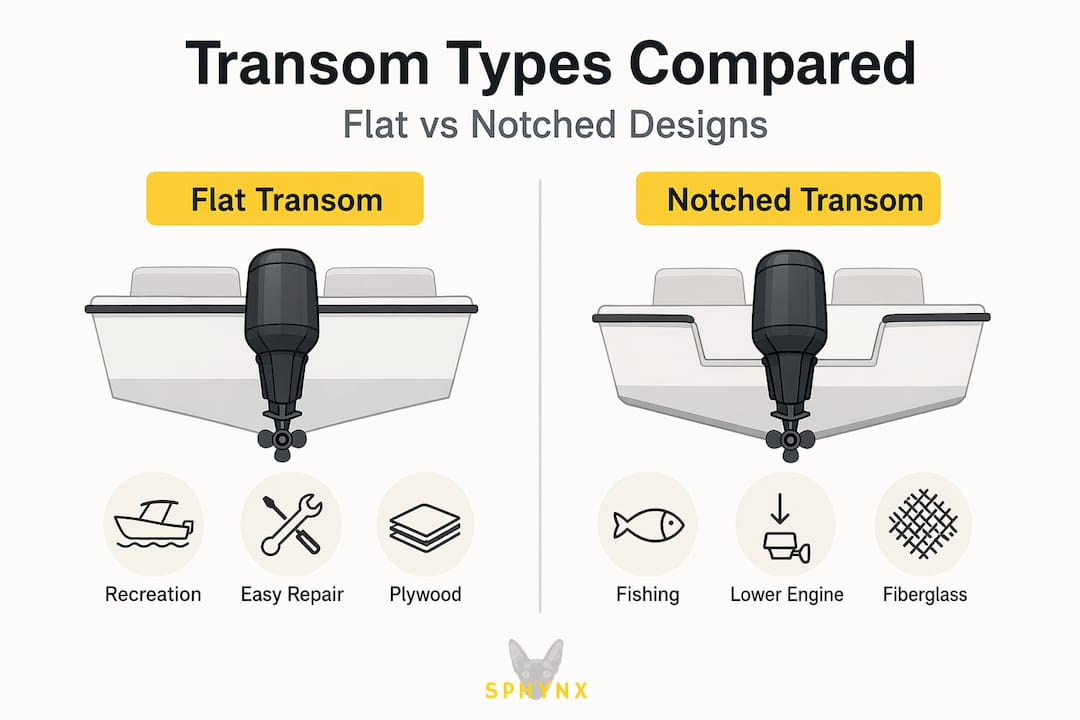
| Flat transom | Small runabouts, tenders, dinghies | Marine ply, aluminium | Simple to build; suits single outboard mounting |
| Raked transom | Performance speedboats, sports cruisers | Composite, fibreglass | Angled back to reduce drag and improve visual profile |
| Notched transom | Centre-console fishing boats | Fibreglass, composite | Cut-out section allows lower engine mounting height |
| Open transom | Tournament fishing boats, offshore vessels | Composite, aluminium | No back wall; permits drainage and multiple engine access |
The flat transom is the workhorse of recreational boating. Straightforward to repair and replace, it suits anyone who needs a practical, cost-effective platform for a single outboard. The raked transom sacrifices some structural simplicity for better hydrodynamics. You see it on sports cruisers and RIBs where visual design and performance matter equally to the buyer.
The notched transom deserves particular attention among fishing enthusiasts. The cut allows the engine to sit lower, improving the anti-ventilation plate position and reducing spray when running in chop. The open transom is the most specialist configuration, used where working from the stern is central to the activity, whether that is tournament fishing, dive operations, or commercial water taxi work.
Contemporary sport cruiser design integrates guest leisure features like glass balustrades, drop-down terraces, and sunbeds into the transom area, a shift that reflects how the aft section of a modern yacht has become an outdoor living space. This multifunctional aft design trend is reshaping what buyers expect from premium vessels, particularly in the charter and leisure market.
Pro Tip: If you are choosing between a flat and raked transom for a sports cruiser, consider how you plan to use the aft deck. Raked designs often limit the usable flat area at the stern, which matters significantly if entertaining guests onboard.
Common transom problems and maintenance
Rot and water ingress are the most critical issues for plywood-cored transoms, and they develop silently. The fibreglass skin looks fine until it does not, and by that point the core is often badly compromised. Here are the warning signs to check for during any inspection:
- Soft or spongy feel when pressing on the transom face
- Water weeping from around engine mounting bolts or fittings
- Visible cracks in the gelcoat, particularly radiating from bolt holes
- A hollow sound when tap testing with a mallet, which indicates delamination or voids in the core
Gelcoat cracks and delamination around bolt holes are often dismissed as cosmetic. They are not. Each crack is a water entry point, and water in a ply core will spread laterally far beyond the original crack before any outward sign appears.
Ten maintenance practices worth following
- Inspect the transom face every season, before and after winter lay-up.
- Tap test the entire transom surface with a mallet or screwdriver handle, listening for hollow or dull areas.
- Rebedding all through-transom fittings with marine-grade sealant every two to three seasons.
- Check engine mounting bolts for corrosion and tightness after every significant use.
- Seal any new drilling or modification immediately with epoxy before inserting fittings.
- Apply a quality antifouling or epoxy barrier coat to the exterior transom face if the boat sits in water for extended periods.
- Inspect the inside face of the transom from the bilge; this is where moisture damage becomes visible first.
- Replace deteriorating rubber seal strips on outboard bracket mounts before they harden and crack.
- Verify that no engine exceeds the transom’s rated horsepower limit. Overpowering stresses the mounts and the surrounding laminate.
- When trailering, use a motor-mounted transom saver. Modern designs in HDPE with integrated steering locks offer substantially better protection than older trailer-mounted designs.
Pro Tip: Marine-grade transom boards for repair typically measure 1.5 inches thick and weigh around 50 lbs for a standard panel. Factor this weight into your planning; replacing a transom alone is a two-person job at minimum, and staging the installation is safer than attempting it in a single session.
Replacement, extensions, and performance tuning
When rot or structural failure means a full fiberglass transom replacement is necessary, preparation makes the difference between a repair that lasts a decade and one that fails within two seasons. Precise measurement of the existing geometry is the starting point. Many experienced builders use cardboard or timber mock-ups to confirm the fit before committing to epoxy bonding, because a misaligned transom creates problems with engine alignment, hull symmetry, and water drainage.
A transom extension is a different project with a specific purpose: moving the engine further aft to lower its height relative to the hull, or to accommodate a larger motor without full replacement. Dry-fitting all components before bonding is critical here. The weight of materials like Douglas fir cleats and marine plywood means that once epoxy sets, correction is expensive.
On performance, the transom height measurement conversation often centres on angle when it should centre on engine height. Anti-ventilation plate positioning at or slightly above the hull bottom line reduces spray, lowers drag, and improves overall handling more reliably than adjusting transom angle. Transom angle does matter. A steeper angle suits slower displacement hulls; a shallower angle suits planing hulls. But getting the engine mounting height correct first will deliver noticeable performance gains on almost any transom boat.
Key steps for a successful transom replacement or extension:
- Remove the engine and all through-hull fittings before starting any structural work
- Photograph the existing layout in detail before demolition
- Cut away damaged fibreglass carefully, preserving as much sound laminate as possible
- Mock-up the new core material before bonding, checking fit against the hull curves
- Apply thickened epoxy in stages, clamping each layer before proceeding
- Tabbing (joining the new transom core to the hull sides with fibreglass cloth strips) must be completed before the transom is considered structural again
My honest take on transom boats and what most buyers miss
I have seen hundreds of boat purchases go wrong because buyers fixated on engine size and hull aesthetics while completely ignoring the transom. It is one of the least glamorous parts of any vessel and one of the most consequential. A beautiful boat with a compromised transom is a liability.
What surprises me most is how often material choice is treated as a technical afterthought. In my experience, understanding whether your boat uses marine ply or a composite core changes how you maintain it, how often you inspect it, and what warning signs you watch for. Those details are not obscure knowledge. They are basic due diligence.
The design trend I find genuinely exciting is the integration of leisure space into the aft transom area on modern sport cruisers and charter yachts. Vessels with drop-down terraces and glass-sided swim platforms have shifted what clients expect from premium onboard experiences. I have seen this replicated beautifully on luxury Mediterranean charter vessels where the transom area effectively becomes an outdoor lounge. The engineering challenge of maintaining structural integrity while opening up the aft section is impressive, and the result for guests is transformative.
My practical advice: when budgeting for a transom boat, set aside at least 10% of the vessel’s value for transom-related maintenance over the first five years. Not because failure is inevitable, but because the cost of prevention is a fraction of the cost of replacement.
— Sphynxbcn
Experience the best of modern yacht design with Sphynxbcn
Understanding how transom design shapes a vessel’s performance and comfort makes you a more discerning passenger as much as a more informed buyer. The advanced aft deck configurations and multifunctional transom spaces described throughout this guide are precisely what you will find aboard the premium yachts in the Sphynxbcn fleet along the Barcelona coastline.

Sphynxbcn offers private yacht tours along the Mediterranean coast, with vessels selected for their quality of build, comfort, and design. Whether you are planning a corporate event at sea, a sunset cruise, or a private celebration, the aft deck and transom areas on these yachts are engineered for exactly the kind of outdoor living experience that modern boat enthusiasts expect. Explore the full range of luxury yacht rentals in Barcelona and see how premium vessel design translates directly into unforgettable time on the water.
FAQ
What is a transom on a boat?
The transom is the flat or slightly curved vertical surface forming the very back wall of a vessel’s hull. It is distinct from the stern, which refers to the entire rear section including the deck and swim platform.
What transom height should an outboard engine be mounted at?
The anti-ventilation plate should sit flush with or slightly above the hull bottom line. This positioning reduces spray and drag, and has a greater performance impact than adjusting the transom angle itself.
How do I know if my transom needs replacing?
Key signs include soft or spongy areas when pressing on the transom face, hollow sounds during tap testing, water weeping from around bolt holes, and visible cracks or delamination in the gelcoat.
What is the best material for a boat transom?
It depends on the application. Composite cores suit high-performance and sports boats. Marine plywood is standard for fibreglass leisure craft. Aluminium is preferred for utility boats and tenders, while solid fibreglass or steel suits heavy-duty commercial vessels.
Can I extend a transom rather than replace it?
Yes. A transom extension moves the engine further aft and can accommodate a larger motor without requiring full replacement. Precise measurement, careful dry-fitting, and staged epoxy bonding are critical to achieving a structurally sound result.